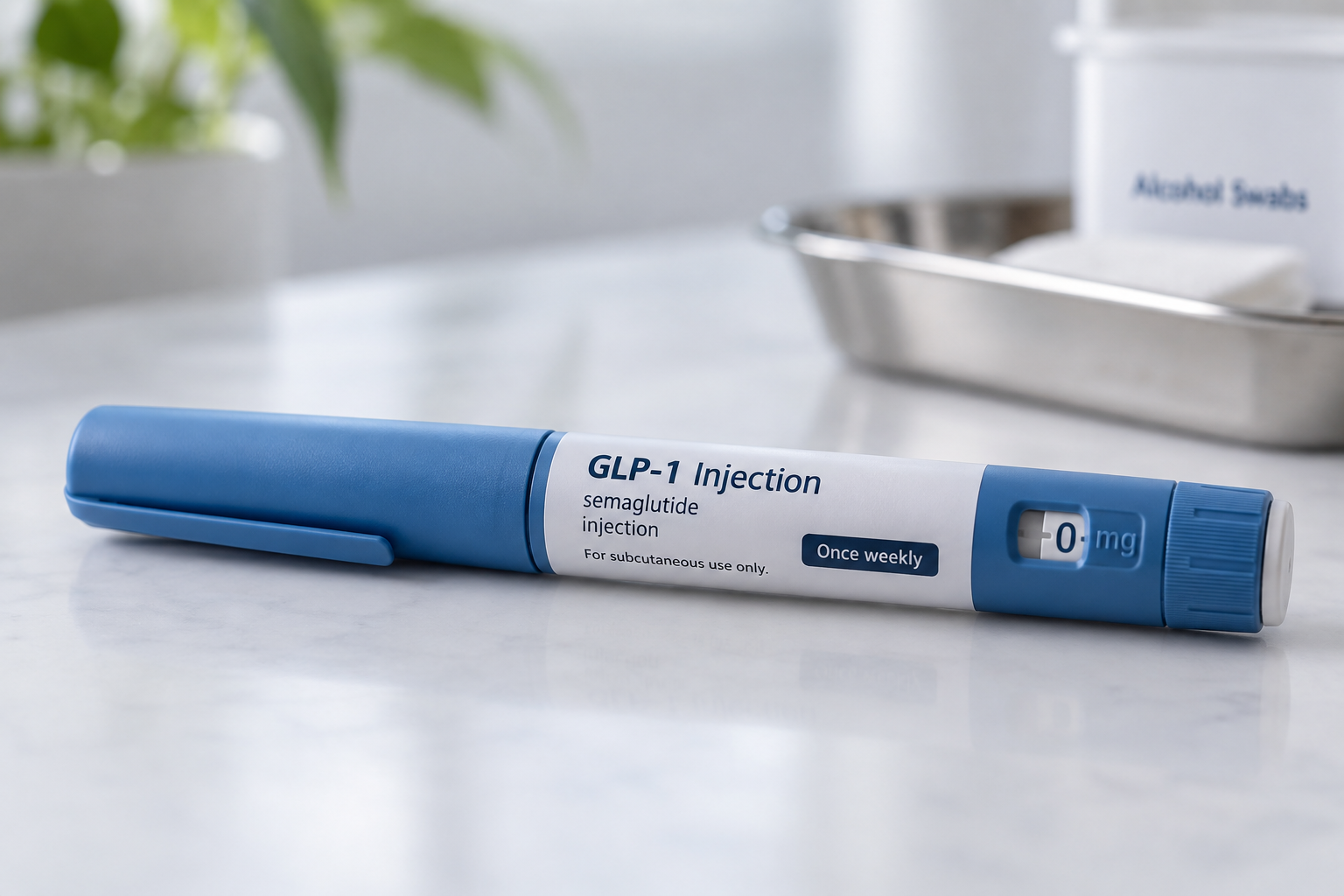
What are GLP-1 Injections? How They Work for Weight Loss and Blood Sugar Control
September 16, 2026
GLP-1 injections are prescription medications that mimic the natural GLP-1 hormone to regulate food intake and blood sugar levels.
GLP-1 injections were originally developed and widely used as treatments for type 2 diabetes, helping people manage blood glucose through their effects on insulin, glucagon and insulin resistance reversal. Today, they are also widely recognised for their role in medical weight management.
This is because the same pathways involved in blood sugar regulation also influence appetite, fullness and food intake. By acting on these interconnected processes, GLP-1-based medications can support both sugar control and weight reduction, depending on the medication and its approved indication.
In this article, we explain what GLP-1 injections are, how they work for weight loss and blood sugar control, and what their effects can mean for longer-term metabolic health.
Understanding GLP-1 injections
GLP-1 stands for glucagon-like peptide-1, an ‘incretin’ hormone released from the gut after eating [1]. It helps the body respond to a meal by improving insulin and glucagon secretion, slowing gastric emptying and signaling fullness to the brain. These combined actions help regulate both appetite and blood glucose.
Natural GLP-1 (produced by our body), however, is short-lived. It is rapidly broken down by the enzyme dipeptidyl peptidase-4 (DPP-4), with active GLP-1 remaining in circulation for only a few minutes. GLP-1 receptor agonists are designed to overcome this limitation [2]. They activate the same receptors as natural GLP-1 but remain active for much longer, allowing the pathway to be used therapeutically.
Types of GLP-1-based injections
Not all medications commonly grouped under the term “GLP-1 injections” work in exactly the same way. An important distinction is whether a medication acts on the GLP-1 pathway alone or combines it with another incretin pathway.
GLP-1 receptor agonists — Medications such as semaglutide and liraglutide activate GLP-1 receptors [3]. Their actions influence appetite and food intake while also affecting insulin and glucagon responses involved in blood glucose regulation.
Dual GIP/GLP-1 receptor agonists — Tirzepatide activates receptors for both GLP-1 and glucose-dependent insulinotropic polypeptide (GIP), another incretin hormone involved in metabolic regulation [4]. It is therefore more accurately described as a dual GIP/GLP-1 receptor agonist, even though it is often discussed alongside GLP-1 medications.
Both approaches use incretin pathways to influence metabolic function, but their mechanisms are not identical. This distinction becomes important when considering how different injections affect appetite, weight and blood sugar control.
How do GLP-1 injections work?
A common misconception is that GLP-1 injections directly burn or break down body fat. They do not. Instead, GLP-1 receptor agonists support weight loss primarily by influencing appetite and food intake, while also affecting digestion and the hormonal responses involved in blood sugar control. They do have a role in reversing insulin resistance which can then remove some of the effect of insulin reducing fat oxidation
After administration, a GLP-1 receptor agonist enters the circulation and activates GLP-1 receptors in several parts of the body. In the brain, GLP-1 signaling influences hunger and satiety. In the gastrointestinal tract, it can slow the rate at which food leaves the stomach. In the pancreas, it affects insulin and glucagon secretion in response to glucose.
Together, these effects can make it easier to consume less food while also helping the body regulate blood glucose.
Appetite and satiety signaling
Reduced hunger — GLP-1 receptors are found in areas of the brain involved in appetite regulation. Activating these pathways can reduce hunger and the drive to eat, which may make it easier to consume less food [5].
Increased satiety — GLP-1 signaling also enhances feelings of fullness and satisfaction after eating. People receiving GLP-1 treatment may feel satisfied with smaller portions and experience less desire to continue eating after a meal [6].
Over time, reduced hunger and increased satiety can lower overall energy intake. When this creates a sustained calorie deficit, body weight can decrease.
Gastric emptying and digestion
Slower gastric emptying — GLP-1 receptor activation can delay the movement of food from the stomach into the small intestine [7]. This can contribute to fullness after eating while also slowing the rate at which nutrients, including glucose, enter the intestine.
Longer-lasting fullness — Slower gastric emptying can help prolong the feeling of fullness after a meal. However, this works alongside GLP-1's effects on appetite signaling in the brain rather than being the sole reason people may eat less.
Insulin and glucagon response
GLP-1 receptor activation also influences two pancreatic hormones involved in blood glucose regulation: insulin and glucagon.
Insulin secretion — When blood glucose is elevated, GLP-1 receptor agonists stimulate pancreatic beta cells to release insulin [8]. This response is glucose-dependent, meaning the effect increases when blood glucose is higher rather than stimulating insulin release at the same level regardless of glucose concentration.
Glucagon suppression — GLP-1 receptor agonists also reduce glucagon secretion when glucose is elevated [9]. As glucagon signals the liver to produce and release glucose, reducing inappropriate glucagon secretion can help limit excess glucose entering the bloodstream.
Together with their effects on digestion, these hormonal responses can help lower fasting and post-meal blood glucose. GLP-1 receptor agonists are not insulin injections; instead, they influence the body's own response to changes in blood glucose. Overall the body becomes more efficient in it’s use of insulin to control sugar levels.
GLP-1 Injections for weight loss
By reducing appetite and food intake, GLP-1 treatment can make it easier to maintain the calorie deficit needed for weight loss. Rather than producing an immediate change in body weight, weight loss typically occurs progressively over the course of treatment.
How much weight a person loses varies. The medication prescribed, dose, duration of treatment, baseline weight, individual response and accompanying lifestyle changes can all influence the outcome. NIDDK notes that weight-loss outcomes with prescription medications vary considerably between individuals [11].
For people with overweight or obesity, the benefits of weight reduction can extend beyond the number on the scale. A 5–10% reduction in initial body weight can be associated with improvements in measures such as blood glucose, blood pressure and triglyceride levels, although the degree of benefit varies according to the individual and their underlying health.
GLP-1 Injections for blood sugar control
GLP-1 receptor agonists were used in the treatment of type 2 diabetes before their wider use in medical weight management. Through the glucose-dependent effects described above, they can help reduce both postprandial (after-meal) and fasting blood glucose.
This is particularly relevant in type 2 diabetes, where insulin resistance and progressive changes in pancreatic beta-cell function can make blood glucose increasingly difficult to regulate. Improving glycaemic control can help reduce persistently elevated glucose levels and forms an important part of managing the condition over time.
GLP-1 treatment is one of several approaches that may be used for type 2 diabetes. The appropriate treatment depends on factors such as a person's glycaemic status, other health conditions, treatment goals and existing medications.
Beyond weight Loss: the wider metabolic effects of GLP-1 treatment
The number on the scale does not tell the whole story. For people with overweight or obesity, losing weight can also be accompanied by changes in blood sugar, blood pressure, triglyceride levels and waist circumference. These improvements can be important when considering how treatment is affecting overall metabolic health.
It is also worth considering where the weight loss is coming from. When body weight decreases, a person can lose both body fat and lean mass, including muscle. This means that losing more kilograms does not necessarily mean achieving a better result.
Looking at factors such as waist circumference, blood sugar control and body composition alongside body weight can give a more complete picture of progress. This is also why maintaining muscle becomes an important part of healthy weight loss during GLP-1 treatment.
Preserving muscle during GLP-1-assisted weight loss
Loss of lean tissue is not unique to GLP-1 treatment; some lean mass is commonly lost whenever substantial weight loss occurs [12]. However, the degree of weight reduction achievable with GLP-1-based medications makes preserving muscle an important consideration. Body-composition studies of semaglutide and tirzepatide have generally shown that fat mass accounts for the greater proportion of weight lost, while lean mass also decreases [13].
Adequate nutrition — A marked reduction in appetite can make it harder to consume sufficient protein and other essential nutrients. Nutritional intake, therefore, needs attention even when the primary treatment goal is weight loss. The most important factor is protein.
Resistance exercise — Appropriate resistance training provides a stimulus for maintaining muscle during weight reduction. Combined with sufficient protein intake and regular physical activity, it can help support muscle mass and physical function as body weight falls.
Preserving lean tissue is crucial because muscle contributes to strength, mobility and metabolic function. The aim of treatment is therefore not simply to produce the largest possible fall in scale weight, but to achieve clinically meaningful weight reduction while supporting overall health and function.
What happens after GLP-1 injections are stopped?
Stopping GLP-1 treatment does not necessarily mean that the physiological factors influencing appetite and weight have resolved. As the medication leaves the body, the effects that helped support reduced food intake and weight loss can diminish.
Appetite may increase — The appetite-regulating effects of GLP-1 treatment lessen after the medication is discontinued [14]. Hunger and food intake may increase again, particularly when the biological factors that contributed to weight gain remain present.
Some weight regain can occur — Weight regain following treatment withdrawal has been documented in clinical trials. In the STEP 1 extension, participants regained approximately two-thirds of their previous semaglutide-associated weight loss within one year of stopping treatment [15]. This was an average study finding, however, and does not predict how much weight any individual will regain.
Key takeaway
GLP-1 injections can support both weight loss and blood sugar control, but they are not simply “fat-burning” injections. They work by changing signals involved in hunger, fullness, digestion and blood glucose regulation, which can make it easier to eat less while helping the body manage blood sugar more effectively.
Treatment also involves more than losing weight. Adequate nutrition, regular physical activity and maintaining muscle mass remain important, particularly as appetite and food intake decrease. How well treatment works, how long it is continued and whether it is appropriate will vary from person to person but is dependent on lifestyle change as well.
If you are considering GLP-1 injections for weight loss or blood sugar control, schedule a consultation with The Metabolic Clinic for an individual assessment and a medically supervised treatment plan.
Not necessarily. Certain GLP-1-based medications are approved for chronic weight management in eligible people without type 2 diabetes, while others have diabetes-specific indications.
On their own, GLP-1 receptor agonists have a relatively low risk of hypoglycaemia because their insulin-stimulating effect is glucose-dependent. The risk can increase when they are combined with insulin or sulfonylureas.
Gastrointestinal effects such as nausea, vomiting, diarrhoea, constipation and abdominal discomfort are among the most commonly reported. The type and severity can vary by medication and individual.
There is no single treatment duration that applies to everyone. Continued use depends on the reason for treatment, individual response, tolerability and whether the benefits continue to outweigh the risks. But all patients need to know that discontinuation can lead to a full reversal of it’s affect and potential weight gain. Thus it needs to be considered carefully.
chat with us
Welcome to The Metabolic Clinic
Holistic Care for Hormones, Bones, and Metabolic Health
Dr Dinesh graduated with honours from Monash University, Melbourne in 2009, receiving the Prince Henry's Prize in Surgery. During his endocrinology training in Melbourne, he won the top registrar award at the Endocrine Society of Australia Clinical Weekend in 2016, followed by securing Australia's only Andrology fellowship in 2017. Upon returning to Singapore, he was the sub-speciality lead for adrenal, pituitary, and bone services at Khoo Teck Puat Hospital and established The Metabolic Bone Clinic.
A passionate educator, he served as Associate Programme Director for Endocrinology at NHG, training the next generation of endocrinologists, and received the NHG Teaching Award for Senior Doctors in 2023. An expert endocrinologist with proficiency in both general and sub-speciality endocrinology, he has an interest in longevity through improving cardiovascular risk, metabolism, bone health, and muscle loss prevention, with the ultimate aim of improving the number of healthy years in one's life.
10+ Years of Experience in Hormone & Metabolic Health
Founder of The Metabolic Bone Clinic in Khoo Teck Puat Hospital
Sub-specialist training with international experts in Melbourne, Australia
Clinical Interest in Longevity & Metabolic Health
START YOUR PERSONALISED HEALTH JOURNEY
If you’re not achieving your treatment targets, struggling with weight changes, fatigue, or unexplained symptoms—it’s time to take a deeper look.
Get clarity with a tailored plan built around you and improving your metabolic health.