How Diabetes Affects the Heart: An Endocrinologist Explains!
April 29, 2026
If not managed properly, diabetes can gradually damage blood vessels and the heart, increasing the risk of cardiovascular disease over time.
You've been managing your diabetes. You're checking your sugar levels, watching what you eat, taking your medication. What's easy to miss is that throughout all of this, something else may be quietly happening with your heart.
Diabetes doesn't just affect blood sugar. Over time, persistently elevated glucose damages the blood vessels that supply the heart, making them narrower, stiffer and more prone to blockage. This process often develops without symptoms. There may be no chest pain, no warning sign that suggests our cardiovascular system is under strain.
The risk compounds further because diabetes rarely travels alone. High blood pressure, altered cholesterol levels, and low-grade inflammation tend to accompany it, each adding to the burden on the heart. Together, they significantly raise the risk of heart disease, often appearing earlier, and progressing more quickly, than it would in someone without diabetes.
Understanding this connection is the first step to doing something about it.
The link between diabetes and our body
Diabetes is a long-term condition in which the level of glucose (sugar) in the blood remains higher than normal [1]. This happens because the body due to a reduced production of insulin +/- an inability to use insulin appropriately. Insulin is the hormone that helps move glucose from the bloodstream into the cells, where it is used for energy. When this process does not work effectively, glucose builds up in the blood instead of being used by the body.
There are two main types of diabetes:
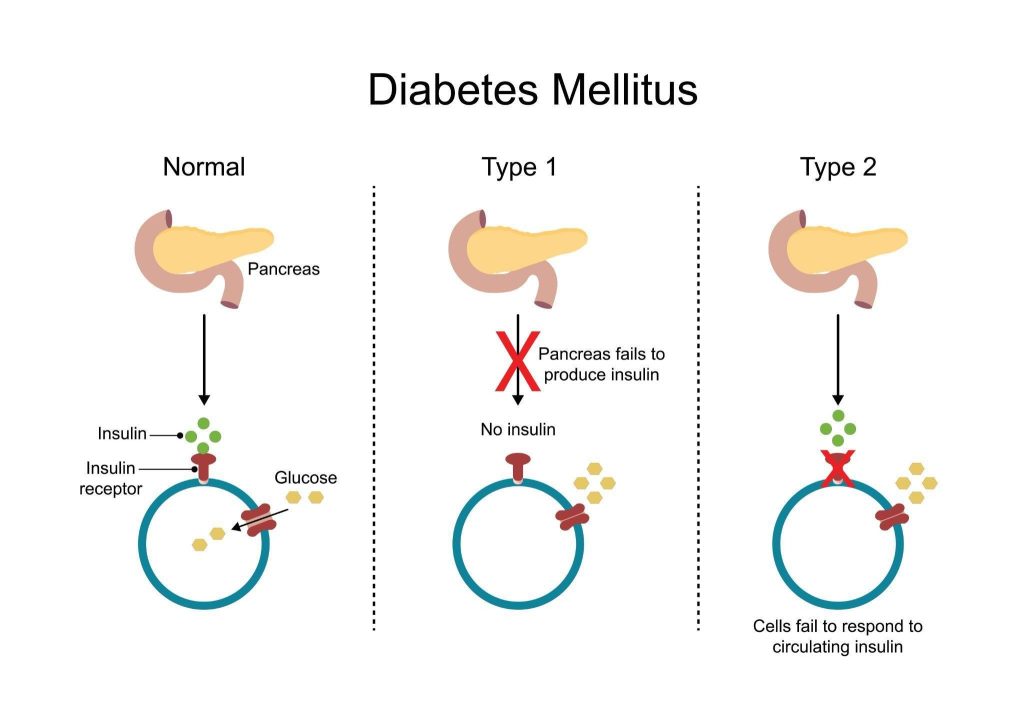
Type 1 diabetes — the body produces little or no insulin because the immune system attacks the insulin-producing cells in the pancreas.
Type 2 diabetes — the body still produces insulin, but it does not respond to it properly (insulin resistance) and, there is not enough insulin to keep blood sugar levels within a normal range.
Over time, consistently raised blood sugar begins to affect how the body functions. Excess glucose in the bloodstream damages the lining of blood vessels, which makes them narrower and less flexible [2]. This affects circulation and reduces the delivery of oxygen and nutrients to vital organs.
These changes develop gradually and may not cause noticeable symptoms in the early stages. This is why diabetes is often described as a condition that works silently over time.
Diabetes mellitus includes Type 1, where the body does not produce insulin, and Type 2, where the body does not respond effectively to insulin, leading to raised blood sugar levels.
Why does diabetes increase risk of heart disease?
Diabetes affects the heart gradually, often without obvious symptoms in the early stages. The increased risk comes from a combination of changes happening within the blood vessels and the body as a whole.
Damage to blood vessels — Persistently high blood sugar damages the inner lining of the arteries [5]. Over time, the vessels become narrower and less flexible, making it easier for fatty deposits to build up and restrict blood flow to the heart.
Ongoing inflammation — Diabetes is linked to low-grade inflammation in the body [6]. This weakens the blood vessels and makes them more prone to injury and plaque formation.
Because of these overlapping effects, people with diabetes are more likely to develop:
Coronary artery disease
Heart attacks
Heart failure
These conditions can also appear earlier and progress more quickly, which is why managing diabetes involves more than controlling blood sugar.
How does high blood sugar damage the vessels?
High blood sugar does not just stay in the bloodstream; it begins to affect the structure and function of the blood vessels and the heart over time. These changes develop gradually, but they play a central role in increasing cardiovascular risk.
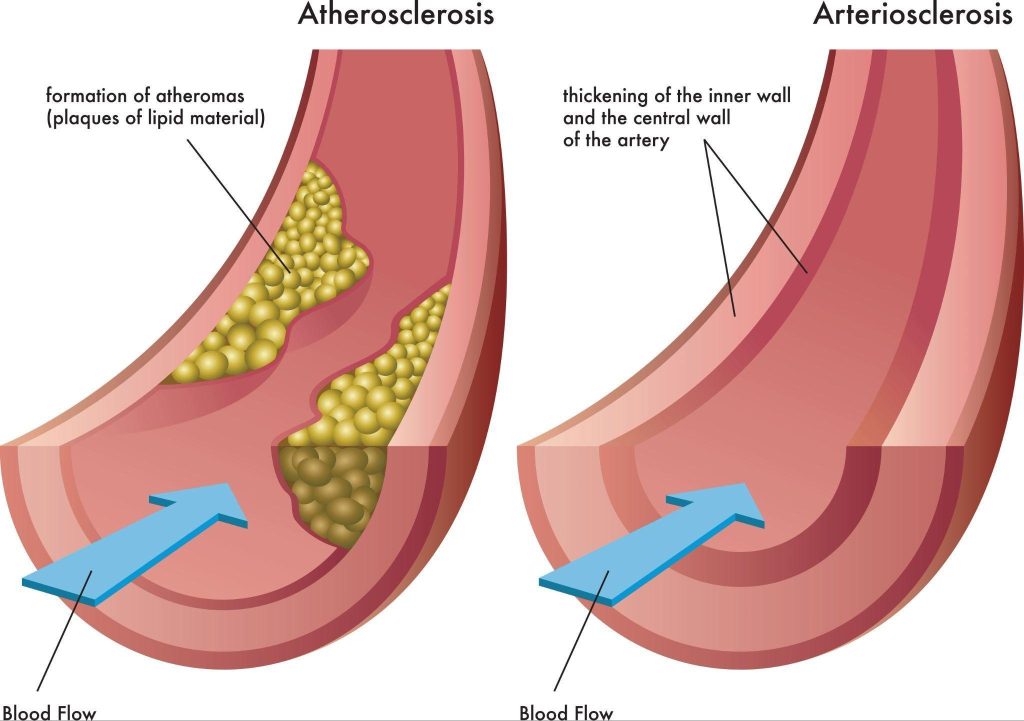
Effects on the arteries (atherosclerosis) — Excess glucose damages the inner lining of the arteries, making them more prone to the build-up of fatty deposits. Over time, these deposits form plaques that narrow and harden the arteries, a process known as atherosclerosis [9]. This reduces the space through which blood can flow and increases the risk of blockages.
Reduced circulation and oxygen supply — As the arteries narrow, blood flow becomes less efficient. The heart and other organs may not receive enough oxygen-rich blood, especially during physical activity or stress [10]. This reduced supply can lead to chest discomfort, fatigue or more serious complications if the blood flow is significantly restricted.
Changes in heart muscle function — High blood sugar can also affect the heart muscle directly. It may lead to stiffness of the heart walls, making it harder for the heart to relax and fill properly. Over time, the heart may become less efficient at pumping blood, which can contribute to conditions such as heart failure [11]. Heart failure is one of the first complications of diabetes over time.
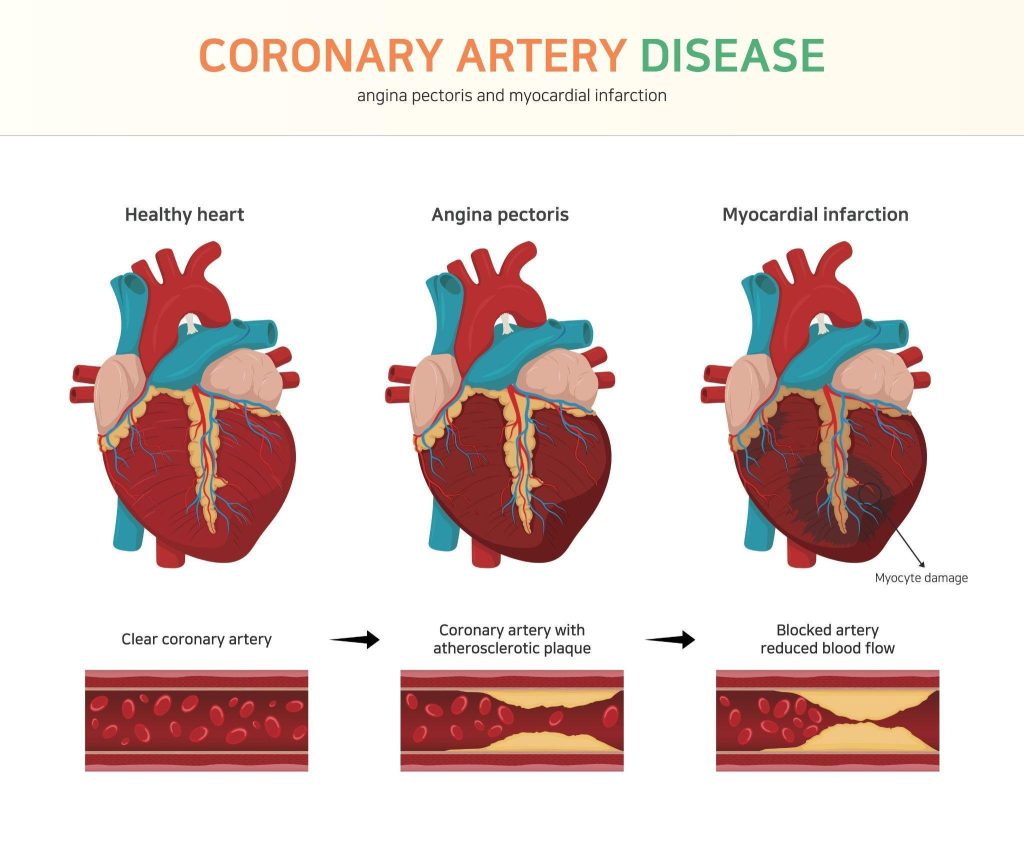
Persistently high blood sugar contributes to atherosclerosis, where fatty plaques build up in the arteries, narrowing them and restricting blood flow.High blood sugar promotes plaque build-up in the coronary arteries, gradually narrowing them (causing angina) and potentially leading to complete blockage and heart attack.
Early warning signs to look out for
Heart problems do not always present clearly in people with diabetes. Some symptoms are typical, while others can be subtle or easily overlooked.
Typical symptoms
Chest discomfort or tightness
Shortness of breath
Fatigue with minimal activity
Pain spreading to the left arm, neck or jaw
Silent or less obvious symptoms
Diabetes can affect nerve function, which may reduce the sensation of pain. This means some people may not experience the classic warning signs of heart problems. Instead, they may notice:
Unexplained tiredness
Mild breathlessness
Dizziness or light-headedness
A general sense of discomfort rather than clear pain
When to seek medical attention
Any new, persistent or worsening symptoms should not be ignored. Urgent medical care is needed if there is chest discomfort, sudden breathlessness, or symptoms that come on quickly. Regular check-ups are also important, even in the absence of symptoms, as some heart conditions in diabetes can develop quietly over time.
The silent heart disease
Diabetes can lead to what is known as silent heart disease, where reduced blood flow to the heart occurs without the typical warning signs. This condition, often referred to as silent ischaemia, means that the heart may not be receiving enough oxygen, yet symptoms such as chest pain may be absent or very mild [16]. As a result, serious heart problems can develop without being recognised early.
A major reason for this is diabetic neuropathy, a form of nerve damage caused by prolonged high blood sugar [17]. When the nerves responsible for transmitting pain signals are affected, the body’s ability to detect discomfort is reduced. This can make symptoms less noticeable or entirely absent, even during significant cardiac events. Because of this, regular screening and routine medical assessments are essential for detecting heart issues early, as relying on symptoms alone may not provide a clear or timely indication of a problem.
Who is at higher risk of heart disease if they have diabetes?
The risk of heart disease in diabetes does not develop in the same way for everyone. Certain factors can increase how strongly diabetes affects the heart, especially when they are present over a long period or occur together.
Longer duration of diabetes — The longer a person lives with diabetes, the more time high blood sugar has to damage the blood vessels. This gradual, cumulative effect increases the likelihood of narrowing arteries and reduced blood flow to the heart.
Lifestyle habits — An unhealthy diet, lack of physical activity and smoking can accelerate vascular damage. These habits worsen blood sugar control and contribute to high blood pressure and cholesterol changes, all of which increase heart risk.
Co-existing conditions — Conditions such as obesity and hypertension place additional strain on the cardiovascular system. When combined with diabetes, they create a higher overall burden on the heart and blood vessels.
Age and family history — Older individuals naturally have a higher risk of heart disease due to age-related changes in the blood vessels. A family history of heart conditions can further increase susceptibility, even with good diabetes control.
Protecting your heart and managing diabetes
Managing diabetes effectively involves more than controlling blood sugar alone. A combination of daily habits and regular monitoring plays a key role in reducing strain on the heart and maintaining overall cardiovascular health.
Blood sugar control — Keeping glucose levels within recommended targets helps prevent ongoing damage to blood vessels. Stable levels reduce the risk of long-term complications affecting the heart.
Heart-healthy diet — A balanced diet supports both blood sugar and cholesterol control. This typically includes whole grains, vegetables, fruits, lean proteins such as fish or chicken and healthy fats like nuts, seeds and olive oil, while limiting processed foods and saturated fats.
Regular physical activity — Consistent exercise, such as brisk walking, cycling or swimming, helps improve circulation and strengthens the heart. It also supports better blood sugar control and weight management.
Weight management — Maintaining a healthy weight improves how the body uses insulin and reduces pressure on the heart. Even modest weight loss can lead to noticeable improvements in cardiovascular risk factors.
Routine monitoring — Regular blood sugar monitoring, cholesterol checks and blood pressure measurements help identify any changes early. This allows timely adjustments to treatment and better long-term control of both diabetes and heart health.
Use of Medication that reduces cardiovascular risk beyond its effect on blood sugar- Use of SGLT-2 class medications as well as GLP-1 class medications can reduce risk of heart attack and stroke as well as heart failure. And they work beyond their effects on blood sugar with effects that help the heart.
Can heart damage from diabetes be reversed or managed?
Some of the effects of diabetes on the heart and blood vessels can improve with good control, especially when changes are made early. Better blood sugar management, along with control of blood pressure and cholesterol, can help stabilise existing damage and reduce further progression. In certain cases, improved lifestyle habits and appropriate treatment can enhance circulation and support heart function.
However, not all damage can be fully reversed. Advanced plaque build-up in the arteries or long-standing changes in the heart muscle can also be improved with medical guidance through optimisation of medication. The long-term outlook can still be positive when diabetes is well-managed. With consistent care, regular monitoring and appropriate medical support, many people are able to reduce complications, maintain quality of life and protect their heart health over time.
When should you see a doctor?
Knowing when to seek medical advice is an important part of managing both diabetes and heart health. Some symptoms require immediate attention, while others may develop gradually and still need timely evaluation.
Red flag symptoms — Chest discomfort, tightness or pressure should always be taken seriously, especially if it spreads to the arm, neck or jaw. Sudden breathlessness, dizziness, unusual sweating or a feeling of faintness may also signal a heart problem and should not be ignored. Emergency services need to be contacted.
Routine vs urgent consultation — Mild or ongoing symptoms such as fatigue, reduced exercise tolerance or intermittent breathlessness should be discussed during a routine medical review. However, symptoms that are sudden, severe or worsening, particularly chest pain or shortness of breath require urgent medical attention.
Importance of early intervention — Heart conditions linked to diabetes can develop quietly, sometimes without clear warning signs. Early medical evaluation allows problems to be identified and managed before they progress. Regular check-ups, even in the absence of symptoms, play a key role in protecting long-term heart health.
Final thoughts
Diabetes affects more than blood sugar. Over time, it places real strain on the heart and blood vessels, often without obvious warning signs, which is why consistent management matters as much as it does.
The good news is that many of these risks are modifiable and recently there have been advances in medicine and knowledge to prevent or improve cardiovascular risk. Keeping blood sugar stable, managing blood pressure and cholesterol, staying active and maintaining regular follow-up with your doctor can all make a meaningful difference to your long-term heart health.
If you are living with diabetes or have concerns about your cardiovascular health, schedule a consultation with The Metabolic Clinic for a personalised assessment, medication optimisation and guidance on managing your risk effectively.
Yachmaneni, A., Jajoo, S., Mahakalkar, C., Kshirsagar, S., & Dhole, S. (n.d.). A comprehensive review of the vascular consequences of diabetes in the lower extremities: Current approaches to management and evaluation of clinical outcomes. Cureus, 15(10), e47525. https://doi.org/10.7759/cureus.47525
Kulkarni, A., Thool, A. R., & Daigavane, S. Understanding the clinical relationship between diabetic retinopathy, nephropathy, and neuropathy: A comprehensive review. Cureus, 16(3), e56674. https://doi.org/10.7759/cureus.56674
Liu, R., Li, L., Shao, C., Cai, H., & Wang, Z. (2022). The impact of diabetes on vascular disease: Progress from the perspective of epidemics and treatments. Journal of Diabetes Research, 2022, 1531289. https://doi.org/10.1155/2022/1531289
Zhao, L., Hu, H., Zhang, L., Liu, Z., Huang, Y., Liu, Q., Jin, L., Zhu, M., & Zhang, L. (2024). Inflammation in diabetes complications: Molecular mechanisms and therapeutic interventions. MedComm, 5(4), e516. https://doi.org/10.1002/mco2.516
Asmat, U., Abad, K., & Ismail, K. (2016). Diabetes mellitus and oxidative stress—A concise review. Saudi Pharmaceutical Journal : SPJ, 24(5), 547–553. https://doi.org/10.1016/j.jsps.2015.03.013
Petrie, J. R., Guzik, T. J., & Touyz, R. M. (2018). Diabetes, hypertension, and cardiovascular disease: Clinical insights and vascular mechanisms. The Canadian Journal of Cardiology, 34(5), 575–584. https://doi.org/10.1016/j.cjca.2017.12.005
Poznyak, A., Grechko, A. V., Poggio, P., Myasoedova, V. A., Alfieri, V., & Orekhov, A. N. (2020). The diabetes mellitus–atherosclerosis connection: The role of lipid and glucose metabolism and chronic inflammation. International Journal of Molecular Sciences, 21(5), 1835. https://doi.org/10.3390/ijms21051835
Oktay, A. A., Paul, T. K., Koch, C. A., & Lavie, C. J. (2000). Diabetes, cardiomyopathy, and heart failure. In K. R. Feingold, R. A. Adler, S. F. Ahmed, B. Anawalt, M. R. Blackman, G. Chrousos, E. Corpas, W. W. de Herder, K. Dhatariya, K. Dungan, E. Hamilton, J. Hofland, S. Jan de Beur, S. Kalra, G. Kaltsas, N. Kapoor, M. Kim, C. Koch, P. Kopp, … D. P. Wilson (Eds.), Endotext. MDText.com, Inc. http://www.ncbi.nlm.nih.gov/books/NBK560257/
Cui, J., Liu, Y., Li, Y., Xu, F., & Liu, Y. (2021). Type 2 diabetes and myocardial infarction: Recent clinical evidence and perspective. Frontiers in Cardiovascular Medicine, 8, 644189. https://doi.org/10.3389/fcvm.2021.644189
Rosano, G. M., Vitale, C., & Seferovic, P. (2017). Heart failure in patients with diabetes mellitus. Cardiac Failure Review, 3(1), 52–55. https://doi.org/10.15420/cfr.2016:20:2
Boudina, S., & Abel, E. D. (2010). Diabetic cardiomyopathy, causes and effects. Reviews in Endocrine & Metabolic Disorders, 11(1), 31–39. https://doi.org/10.1007/s11154-010-9131-7
Abdul Manan, H., Chishti, H. R., & Hewlett, F. D. (n.d.). Prevalence and predictors of silent myocardial ischemia in diabetic patients. Cureus, 17(4), e82407. https://doi.org/10.7759/cureus.82407
Yang, Y., Zhao, B., Wang, Y., Lan, H., Liu, X., Hu, Y., & Cao, P. (2025). Diabetic neuropathy: Cutting-edge research and future directions. Signal Transduction and Targeted Therapy, 10, 132. https://doi.org/10.1038/s41392-025-02175-1
chat with us
Welcome to The Metabolic Clinic
Holistic Care for Hormones, Bones, and Metabolic Health
Dr Dinesh graduated with honours from Monash University, Melbourne in 2009, receiving the Prince Henry's Prize in Surgery. During his endocrinology training in Melbourne, he won the top registrar award at the Endocrine Society of Australia Clinical Weekend in 2016, followed by securing Australia's only Andrology fellowship in 2017. Upon returning to Singapore, he was the sub-speciality lead for adrenal, pituitary, and bone services at Khoo Teck Puat Hospital and established The Metabolic Bone Clinic.
A passionate educator, he served as Associate Programme Director for Endocrinology at NHG, training the next generation of endocrinologists, and received the NHG Teaching Award for Senior Doctors in 2023. An expert endocrinologist with proficiency in both general and sub-speciality endocrinology, he has an interest in longevity through improving cardiovascular risk, metabolism, bone health, and muscle loss prevention, with the ultimate aim of improving the number of healthy years in one's life.
10+ Years of Experience in Hormone & Metabolic Health
Founder of The Metabolic Bone Clinic in Khoo Teck Puat Hospital
Sub-specialist training with international experts in Melbourne, Australia
Clinical Interest in Longevity & Metabolic Health
START YOUR PERSONALISED HEALTH JOURNEY
If you’re not achieving your treatment targets, struggling with weight changes, fatigue, or unexplained symptoms—it’s time to take a deeper look.
Get clarity with a tailored plan built around you and improving your metabolic health.