What Happens After You Stop GLP-1 Injections? Understanding Weight Regain and Long-Term Management
October 28, 2026
Maintaining weight loss after GLP-1 treatment involves balanced nutrition, regular physical activity and sustainable lifestyle habits.
Losing weight with GLP-1 injections can be a significant achievement, but what happens when you stop treatment? Will your appetite return? And will you regain the weight you've worked so hard to lose?
These concerns are understandable. While GLP-1 medications can support substantial weight loss, their effects are fully reversible after treatment ends, which can make sustained weight loss a challenge. Trials show that 2/3rds of weight loss returns within one year or stopping these medications and it may be more if the medication was used for a shorter period of time. For some it is medically necessary to continue these medications long-term.
Knowing this, understanding what changes after stopping GLP-1 injections, and how to manage those changes, can help reduce this.
What happens to your body after stopping GLP-1 injections?
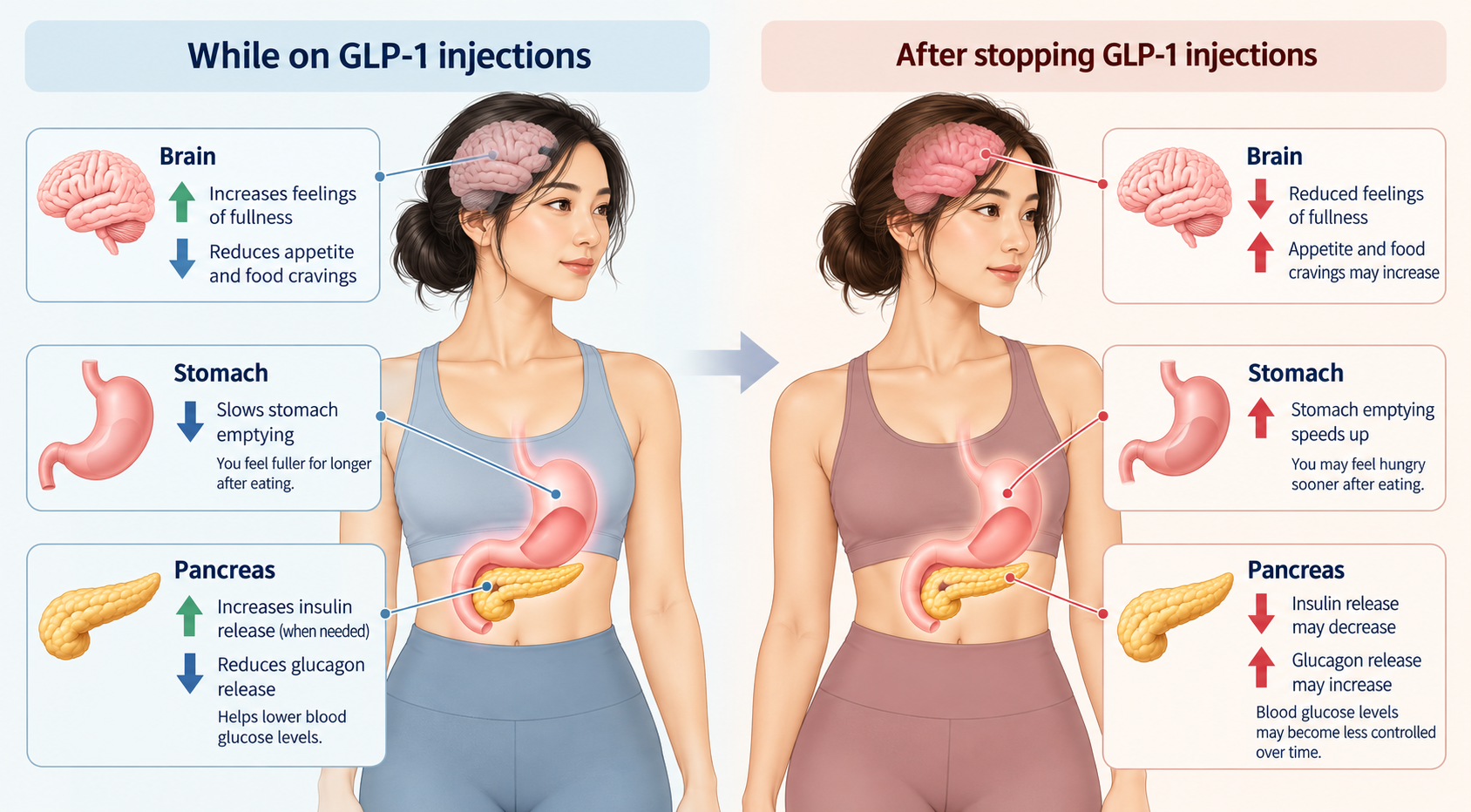
GLP-1 injections help regulate appetite, slow stomach emptying and improve blood sugar control. These effects gradually diminish after stopping treatment.
GLP-1 medications don't stop working immediately after your final injection. Their effects gradually wear off as the medication leaves your system, with the timing depending on the drug used.
As this happens, you may notice changes in your appetite, how full you feel after meals and, in some cases, your blood sugar levels. Cessation in diabetes is therefore not advised without strict medical supervision. These changes don't necessarily mean your body is returning to its previous weight, but they can make weight maintenance more challenging.
Hunger and appetite may return
One of the first changes you might notice is feeling hungrier than you did during treatment.
GLP-1 injections help regulate appetite and increase feelings of fullness, making it easier to feel satisfied with smaller portions. Once these effects wear off, you might find yourself getting hungry sooner after meals, thinking about food more often or needing larger portions to feel satisfied.
This is a normal physiological response, not a sign that you've lost control of your eating habits. The hunger hormones have gone up and the body is trying to get back to a previous elevated weight.
Changes in blood sugar regulation
GLP-1 medications help regulate blood sugar by increasing insulin secretion and reducing glucagon release when blood glucose levels are elevated.
After stopping treatment, these benefits gradually diminish. For people with type 2 diabetes, blood sugar levels can rise again, especially if the medication was an important part of their diabetes management. For some this may even require insulin to mitigate as GLP-1 based medications have a strong effect on improving diabetes.
Weight regain can also reduce some of the improvements in insulin sensitivity achieved during treatment. This makes ongoing monitoring important, even if your weight remains relatively stable.
Why does weight regain happen after stopping GLP-1 injections?
Weight regain after GLP-1 treatment is common, although the amount and timing vary from person to person. Most notice the numbers on the scale gradually increasing over the following months.
This happens partly because the appetite-regulating effects of GLP-1 medications wear off. As hunger returns, eating the same portions or maintaining the same calorie intake can become more difficult.
Your body also adapts to weight loss. After losing a significant amount of weight, it generally requires less energy to function, meaning you may burn fewer calories than you did at your starting weight. Together, these changes can make weight regain more likely, even when your daily habits haven't changed dramatically.
Why weight regain isn’t simply about willpower
It's easy to feel discouraged when the weight starts coming back, especially after putting so much effort into losing it. However, weight management involves more than diet, exercise and self-discipline.
Losing weight triggers biological responses that can increase hunger and encourage the body to regain weight. GLP-1 medications help manage some of these responses while you're taking them, but the underlying mechanisms don't necessarily disappear once you've reached your goal.
Regaining weight doesn't mean you've failed or that your previous efforts were wasted. It highlights why maintaining weight loss can be just as challenging as losing it, and why long-term support matters.
What factors influence weight regain after GLP-1 treatment?
How much weight you maintain after stopping GLP-1 injections depends on several factors, many of which are interconnected.
Amount of weight lost
Larger weight reductions can be harder to maintain as your body’s energy needs and appetite signals change.
Eating habits
Changes in hunger, portion sizes and meal patterns can influence how much weight returns.
Physical activity
Regular movement supports weight maintenance, while resistance training helps preserve muscle mass.
Underlying health conditions
Conditions such as type 2 diabetes can affect metabolic health and require continued care.
These factors don't determine your outcome on their own. Understanding how they affect you can help guide a more personalised approach to weight maintenance.
How to maintain weight loss after stopping GLP-1 injections
Maintaining weight loss after GLP-1 treatment can take some adjustment, especially as your appetite returns. Rather than trying to eat as little as you did while on medication, the goal is to build habits that keep you satisfied, active and healthy over time. This should start while you are on GLP-1 medication.
Eat regular, balanced meals
As hunger returns, skipping meals or restricting portions too much can leave you feeling hungrier later in the day. Focus on regular meals that include protein, fibre-rich vegetables, whole grains and healthy fats to support fullness and adequate nutrition.
Keep up with physical activity
Exercise supports weight maintenance, but it doesn't have to mean spending hours at the gym. Walking, cycling, swimming and other activities you enjoy can help you stay consistent.
Include resistance training where possible to maintain muscle mass and strength, especially after significant weight loss.
Monitor your weight without obsessing over it
Small weight fluctuations are normal and don't necessarily indicate fat gain. Checking your weight periodically can help you recognise longer-term trends without reacting to every change on the scale.
If you notice a steady increase over several weeks, speak with your doctor about whether your management plan needs adjusting.
Prioritise sleep and stress management
Poor sleep and ongoing stress can influence hunger, food cravings and eating patterns. Getting sufficient rest and finding manageable ways to cope with stress can make it easier to maintain healthy routines.
Continue with medical follow-ups
Stopping GLP-1 injections doesn't have to mean the end of medical support. Regular follow-ups allow your doctor to review your weight, appetite, blood sugar and other metabolic health markers.
If maintaining your weight becomes difficult, your doctor can help you explore appropriate adjustments or additional treatment options. Sometimes reinstitution of GLP-1 based medications at a lower dose may be necessary.
Should you stop GLP-1 injections once you reach your goal weight?
Reaching your target weight is an important milestone, but it doesn't necessarily mean it's time to stop GLP-1 treatment.
Obesity is a chronic condition, and maintaining weight loss can require ongoing care. For some people, continuing GLP-1 medication helps manage appetite and reduce the likelihood of weight regain. Others may be able to transition off treatment with appropriate lifestyle adjustments and medical support.
There is no single approach that works for everyone. Your doctor will consider several factors before recommending whether to continue, adjust or discontinue treatment, including:
Your weight and treatment progress — How much weight you've lost, whether your weight has stabilised and your overall response to treatment.
Underlying health conditions — Whether you have type 2 diabetes or other metabolic conditions that still require management.
Side effects and tolerability — How well you're responding to the medication and whether any adverse effects are affecting your quality of life.
Long-term treatment goals — Your health priorities, preferences and whether the benefits of continued treatment outweigh the potential risks.
If you're considering stopping GLP-1 injections, speak with your prescribing doctor first. Together, you can decide on an appropriate treatment plan and how best to maintain your progress after discontinuation.
Managing your weight beyond GLP-1 treatment
Stopping GLP-1 injections can bring changes to your appetite, eating habits and weight. While some weight regain is common, it doesn't mean the progress you've made has been lost. With the right support, maintaining a healthier weight remains possible.
At The Metabolic Clinic, Dr Dinesh believes in finding a balance between medical treatment and sustainable lifestyle changes, rather than relying solely on medication for weight management. His approach focuses on understanding each patient's metabolic health and developing a long-term strategy that supports weight maintenance, overall well-being and lasting lifestyle improvements.
Whether you're considering stopping GLP-1 injections or exploring your next steps, schedule a consultation with us to discuss a personalised, metabolism-focused approach to sustainable weight management.
There is no fixed amount of weight you can expect to regain. Some people maintain much of their weight loss, while others regain a significant portion over time. The amount and rate of regain depend on factors such as appetite, eating habits, physical activity and individual metabolic responses. A recent trial showed 2/3rds of weight was regained at 1 year after cessation.
Weight regain typically develops gradually over several months rather than immediately after your last injection. However, you might notice changes in hunger and appetite sooner as the medication wears off. The timeline varies depending on the medication, your body's response and your lifestyle habits.
GLP-1 injections generally do not require gradual dose reduction before stopping but gradual reductions are advised. Discontinuation should be discussed with your prescribing doctor, especially if you're taking the medication for type 2 diabetes. Your doctor can assess how stopping treatment might affect your blood sugar, weight and overall metabolic health.
This depends on the medication. Semaglutide can remain in your system for approximately five to seven weeks after the last dose, while tirzepatide typically takes around 30 days to be largely eliminated. Their appetite-regulating effects gradually diminish during this period.
Restarting treatment may be an option, but it depends on your current weight, medical history and reasons for stopping. Your doctor will need to reassess whether GLP-1 medication remains appropriate. If you've been off treatment for an extended period, you may also need to restart at a lower dose to reduce gastrointestinal side effects.
The effects of GLP-1 medications on appetite and blood sugar regulation gradually diminish after treatment stops. However, losing weight also changes your body's energy requirements. At a lower weight, you generally need fewer calories than before, which can make weight maintenance more challenging. This is a normal adaptation to weight loss and does not necessarily mean your metabolism has been damaged.
chat with us
Welcome to The Metabolic Clinic
Holistic Care for Hormones, Bones, and Metabolic Health
Dr Dinesh graduated with honours from Monash University, Melbourne in 2009, receiving the Prince Henry's Prize in Surgery. During his endocrinology training in Melbourne, he won the top registrar award at the Endocrine Society of Australia Clinical Weekend in 2016, followed by securing Australia's only Andrology fellowship in 2017. Upon returning to Singapore, he was the sub-speciality lead for adrenal, pituitary, and bone services at Khoo Teck Puat Hospital and established The Metabolic Bone Clinic.
A passionate educator, he served as Associate Programme Director for Endocrinology at NHG, training the next generation of endocrinologists, and received the NHG Teaching Award for Senior Doctors in 2023. An expert endocrinologist with proficiency in both general and sub-speciality endocrinology, he has an interest in longevity through improving cardiovascular risk, metabolism, bone health, and muscle loss prevention, with the ultimate aim of improving the number of healthy years in one's life.
10+ Years of Experience in Hormone & Metabolic Health
Founder of The Metabolic Bone Clinic in Khoo Teck Puat Hospital
Sub-specialist training with international experts in Melbourne, Australia
Clinical Interest in Longevity & Metabolic Health
START YOUR PERSONALISED HEALTH JOURNEY
If you’re not achieving your treatment targets, struggling with weight changes, fatigue, or unexplained symptoms—it’s time to take a deeper look.
Get clarity with a tailored plan built around you and improving your metabolic health.