Established nerve damage cannot always be reversed, but progression can often be slowed
Treatment
Blood glucose optimisation, lifestyle measures, medications for nerve pain, foot care
Tingling and numbness in the feet are common early symptoms of diabetic neuropathy, a diabetes-related nerve complication that can progress if left untreated.
Persistent tingling, burning, numbness or unusual sensations, particularly in someone living with diabetes, may be an early sign of diabetic neuropathy. This common complication of diabetes develops when persistently elevated blood glucose damages the nerves over time, increasing the risk of loss of sensation, unnoticed injuries, foot ulcers, infections and, in severe cases, amputation if left untreated.
Because diabetic neuropathy often develops gradually, its early symptoms may be mistaken for normal ageing, poor circulation or temporary nerve irritation. Early diagnosis and appropriate diabetes management are important to help slow disease progression, relieve symptoms and reduce the risk of serious complications.
In this article, we explain what diabetic neuropathy is, its symptoms, causes and risk factors, how it is diagnosed, and the treatment and lifestyle measures that can help protect nerve health.
What is diabetic neuropathy?
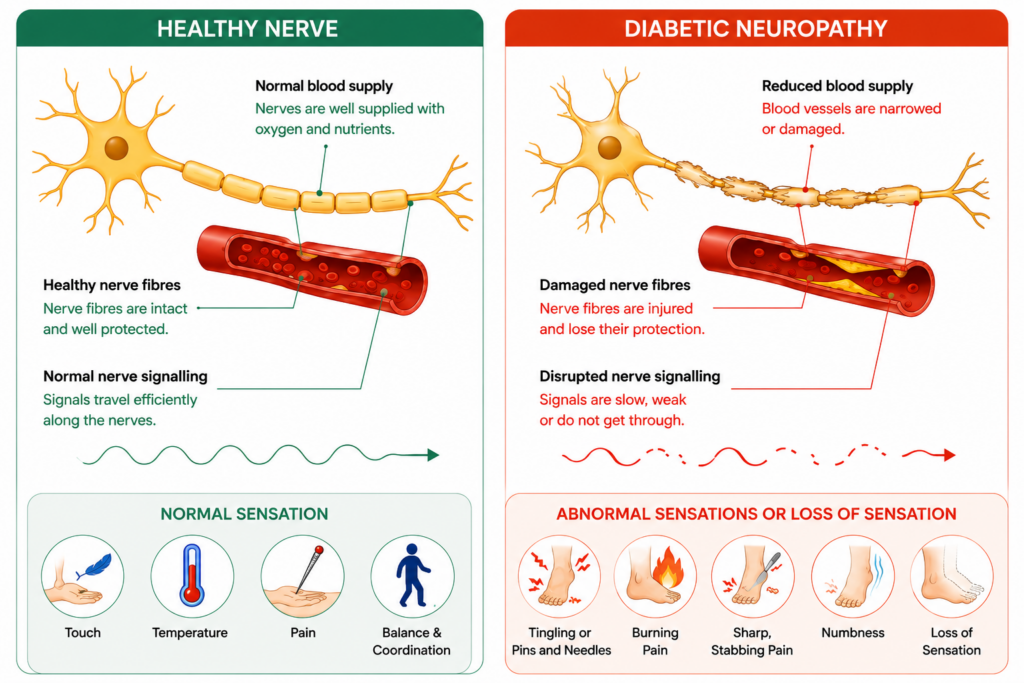
Comparison of a healthy nerve and a nerve affected by diabetic neuropathy, showing how diabetes disrupts nerve function and leads to abnormal sensations.
Diabetic neuropathy is a type of nerve damage caused by diabetes. Persistently elevated blood glucose levels, together with other metabolic changes associated with diabetes, can gradually damage the nerves and the small blood vessels that supply them with oxygen and nutrients [1]. Although diabetic neuropathy can affect nerves throughout the body, the most common form, peripheral diabetic neuropathy, primarily affects the feet and legs before potentially progressing to the hands.
Unlike the temporary “pins and needles” that occur after sitting in one position for too long, diabetic neuropathy results from ongoing nerve damage. Without appropriate diabetes management, the condition can progress over time, leading to persistent pain, numbness, loss of sensation and an increased risk of foot injuries and other complications.
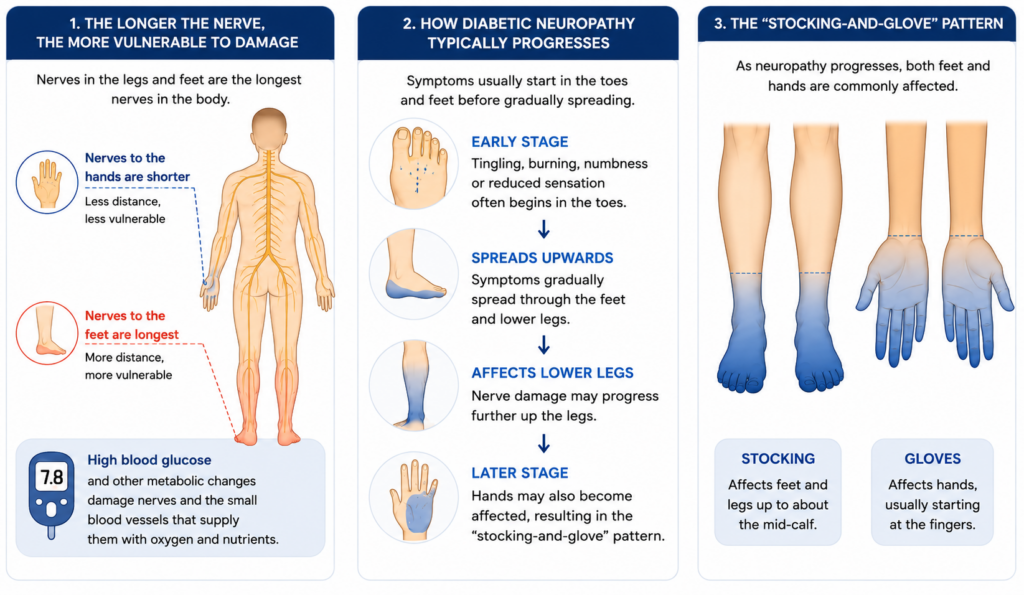
Diabetic neuropathy usually begins in the feet because the longest nerves are most vulnerable to diabetes-related nerve damage.
Why are feet usually affected first?
Diabetic neuropathy usually affects the feet first because the nerves supplying the feet are the longest in the body. Longer nerves are generally more vulnerable to damage caused by persistently elevated blood glucose and other metabolic changes associated with diabetes. As a result, symptoms often begin in the toes before gradually spreading upwards through the feet and lower legs. As nerve damage progresses, the hands may also become affected, resulting in the characteristic "stocking-and-glove" pattern of diabetic peripheral neuropathy.
Signs and symptoms of diabetic neuropathy
The symptoms of diabetic neuropathy vary from person to person and often develop gradually over months or years. In the early stages, some people may notice only occasional tingling or mild numbness, while others experience burning discomfort or increased sensitivity. As nerve damage progresses, symptoms may become more frequent and begin to interfere with daily activities, sleep and mobility.
Common symptoms of diabetic peripheral neuropathy include:
Tingling or “pins and needles” sensations, particularly in the feet or toes
Numbness or reduced ability to feel pain, temperature or touch
Burning, sharp, stabbing or shooting pain that may worsen at night
Increased sensitivity to touch, where even bedsheets or socks may feel uncomfortable
Muscle weakness or reduced coordination
Difficulty with balance or walking due to loss of sensation in the feet
Because sensation is reduced, many people may not notice cuts, blisters or burns on their feet until they become infected. This is why recognising the symptoms of diabetic neuropathy early and seeking timely medical evaluation is essential to prevent more serious complications. Those with diabetes neuropathy must do daily self-checks of their feet to pick up trauma early and prevent progression to a diabetes foot infection.
Types of diabetic neuropathy
Diabetic neuropathy can affect different nerves throughout the body, depending on which nerves have been damaged. The four main types include:
Type
Commonly affects
Symptoms
Peripheral
Feet, legs, hands
Tingling, numbness, burning pain
Autonomic
Internal organs
Digestive, bladder, heart rate or sweating problems
Proximal
Hip, thigh, buttocks
Pain and muscle weakness
Focal
Single nerve
Sudden weakness or pain in one area
Peripheral diabetic neuropathy is by far the most common type and is responsible for the tingling, numbness and burning sensations experienced by many people with diabetes.
Could tingling or numbness be caused by something else?
Although diabetic neuropathy is one of the most common causes of tingling and numbness in people with diabetes, these symptoms are not always caused by nerve damage related to diabetes. Several other medical conditions can produce similar symptoms and may require different treatment.
Possible causes include:
Vitamin B12 deficiency, particularly in people taking metformin long term
Carpal tunnel syndrome or other nerve compression disorders
A trapped nerve in the neck or lower back
Thyroid disorders
Kidney disease
Peripheral arterial disease (poor circulation)
Alcohol-related nerve damage
Certain medications that affect the nerves
Because the causes of tingling and numbness can overlap, a medical assessment is important to identify the underlying condition and determine the most appropriate treatment. Your doctor may recommend blood tests or other investigations to rule out alternative causes before confirming a diagnosis of diabetic neuropathy.
When should tingling or numbness be checked by a doctor?
Persistent tingling, numbness or burning sensations should never be ignored, especially if you have diabetes. Early medical evaluation can help identify whether your symptoms are due to diabetic neuropathy or another underlying condition and allows appropriate treatment to begin before complications develop.
You should arrange a medical assessment if your symptoms:
Persist or keep recurring
Affect both feet or both hands
Gradually spread or become more severe
Disturb your sleep
Cause weakness, poor balance or difficulty walking
Reduce your ability to feel pain, temperature or touch
Occur together with a foot wound, blister, swelling or skin colour changes
Occur in the hands early on (suggesting a process other than diabetes)
Seek prompt medical attention if you experience:
A foot wound that is not healing
Redness, warmth, swelling, discharge or an unpleasant odour from a foot wound
Fever together with a foot wound
A sudden loss of sensation or muscle strength
Rapidly worsening symptoms
Severe numbness or weakness affecting one side of the body
Sudden numbness or weakness should not be assumed to be diabetic neuropathy, as it may indicate another serious medical condition requiring urgent assessment, such as a stroke. Prompt medical attention is essential in these situations.
How is diabetic neuropathy diagnosed?
There is no single test that confirms diabetic neuropathy. Instead, the diagnosis is based on a combination of your symptoms, medical history and physical examination. Your doctor will assess the pattern and progression of your symptoms while looking for signs of nerve damage and excluding other possible causes of tingling or numbness.
During the assessment, your doctor may evaluate:
The location, pattern and duration of your symptoms
Your diabetes history and blood glucose control
Current medications and other medical conditions
Sensation in your feet and legs
Reflexes and muscle strength
Balance and walking
The condition of your skin, foot pulses and any foot deformities
Depending on your symptoms, your doctor may recommend one or more of the following tests:
Blood tests to identify other possible causes, such as vitamin B12 deficiency or thyroid disorders
Nerve conduction studies or electromyography (EMG) in selected cases when the diagnosis is uncertain or another nerve disorder is suspected
Not everyone requires specialised nerve tests. In many cases, a typical history and physical examination provide sufficient information to diagnose diabetic peripheral neuropathy and guide treatment.
How is Diabetic Neuropathy Treated?
Treatment focuses on slowing the progression of nerve damage, relieving symptoms and reducing the risk of complications such as foot ulcers and infections. The most appropriate treatment plan varies from person to person and is tailored to the severity of symptoms, overall health and diabetes control.
Maintaining good diabetes control is one of the most important ways to slow the progression of diabetic neuropathy. Instead of aiming for rapid or extreme reductions in blood glucose, treatment focuses on achieving personalised targets safely and consistently under medical supervision.
Following a balanced, nutritious diet and sometimes supplementation with additional antioxidants
Achieving and maintaining a healthy weight, where appropriate
For people experiencing neuropathic pain, doctors may also recommend medications specifically designed to relieve nerve pain, alongside regular foot care and monitoring to reduce the risk of complications.
Neuropathic pain differs from pain caused by muscle or joint injuries and often does not respond well to conventional painkillers. Instead, doctors may prescribe medications that target abnormal nerve signalling to help relieve burning, tingling or shooting pain. The most appropriate treatment depends on your symptoms, overall health and individual treatment goals.
Can diabetic neuropathy be prevented?
Continuous glucose monitoring, together with a healthy diet and lifestyle, helps maintain stable blood glucose levels, reducing the risk of nerve damage and slowing the progression of diabetic neuropathy.
Diabetic neuropathy cannot always be prevented, but maintaining good diabetes control and addressing other risk factors can significantly reduce the likelihood of developing nerve damage or slow its progression. Regular monitoring is especially important because neuropathy may develop gradually before symptoms become noticeable.
Measures that may help reduce the risk include:
Attending regular diabetes reviews
Maintaining personalised blood glucose targets
Controlling blood pressure and cholesterol levels
Stopping smoking
Staying physically active
Following a balanced, healthy diet
Practising proper daily foot care
Undergoing annual foot and neuropathy screening
Seeking medical advice promptly if new symptoms such as tingling, numbness or burning sensations develop
Early detection and proactive diabetes management remain the most effective strategies for protecting nerve health and preventing long-term complications.
Schedule a consultation
Tingling, numbness or burning sensations should never be dismissed as a normal part of ageing or simply “poor circulation,” especially if you have diabetes. While these symptoms are commonly associated with diabetic neuropathy, they can also result from other underlying conditions that require medical evaluation.
Managing diabetic neuropathy goes beyond relieving nerve pain. It requires a comprehensive approach that includes optimising blood glucose control, addressing cardiovascular risk factors, practising good foot care and attending regular diabetes reviews. With appropriate treatment and ongoing monitoring, many people can successfully manage their symptoms and protect their long-term nerve health.
If you are experiencing persistent tingling, numbness, burning sensations or nerve pain, consider scheduling a consultation with The Metabolic Clinic for a comprehensive assessment, personalised diabetes management and early screening for diabetic neuropathy.
Reduced sensation means cuts, blisters or burns may go unnoticed until they become infected. Daily foot checks, appropriate footwear and prompt treatment of wounds are important for reducing the risk of ulcers, infections and, in severe cases, amputation.
Yes. Although less common than in diabetes, some people with prediabetes can develop nerve damage, particularly affecting the small nerve fibres. Persistent tingling or burning sensations should be assessed by a healthcare professional rather than ignored.
No. Some people experience burning or shooting pain, while others have little or no pain despite significant nerve damage. In many cases, numbness and loss of sensation may be the only symptoms.
Yes. Diabetic neuropathy often develops gradually, and early nerve damage may not cause noticeable symptoms. This is why regular foot examinations and neuropathy screening are recommended for people with diabetes.
The exact reason is not fully understood, but reduced distractions, changes in body temperature and alterations in nerve signalling during the night may make neuropathic pain feel more noticeable, often disrupting sleep.
Not always. Established nerve damage may not be completely reversible, but achieving and maintaining good blood glucose control can help slow further progression and may improve symptoms in some people.
Yes. Persistent tingling, numbness or burning sensations should be assessed promptly. A diabetes specialist can determine whether your symptoms are caused by diabetic neuropathy or another condition and recommend an appropriate management plan.
Yes. Without appropriate diabetes management, diabetic neuropathy can gradually progress, leading to worsening pain, numbness and loss of sensation. Maintaining good blood glucose control and addressing other risk factors can help slow its progression.
Usually not. Diabetic peripheral neuropathy typically affects both feet in a symmetrical "stocking" pattern. Symptoms affecting only one foot may suggest another condition, such as a trapped nerve or local nerve injury, and should be medically assessed.
No. Although diabetic neuropathy is a common complication of diabetes, not everyone develops it. The risk increases with longer diabetes duration and persistently elevated blood glucose levels, but good diabetes management can help reduce the likelihood of nerve damage.
References
Yang, Y., Zhao, B., Wang, Y., Lan, H., Liu, X., Hu, Y., & Cao, P. (2025). Diabetic neuropathy: Cutting-edge research and future directions. Signal Transduction and Targeted Therapy, 10, 132. https://doi.org/10.1038/s41392-025-02175-1
Pop-Busui, R., Ang, L., Boulton, A. J. M., Feldman, E. L., Marcus, R. L., Mizokami-Stout, K., Singleton, J. R., & Ziegler, D. (2022). Diagnosis and treatment of painful diabetic peripheral neuropathy. American Diabetes Association. http://www.ncbi.nlm.nih.gov/books/NBK580224/
Armstrong, D. G., Bley, K., Simpson, D. M., Staats, P., Allen, S., Carnevale, A., & Marcondes, L. (2025). Diabetic peripheral neuropathy: Pathophysiology and new insights into the mechanism of action of high-concentration topical capsaicin. Journal of Experimental Pharmacology, 17, 651–665. https://doi.org/10.2147/JEP.S526968
Al Zoubi, M. S., Al Kreasha, R., Aqel, S., Saeed, A., Al-Qudimat, A. R., & Al-Zoubi, R. M. (2024). Vitamin B12 deficiency in diabetic patients treated with metformin: A narrative review. Irish Journal of Medical Science, 193(4), 1827–1835. https://doi.org/10.1007/s11845-024-03634-4
Dros, J., Wewerinke, A., Bindels, P. J., & van Weert, H. C. (2009). Accuracy of monofilament testing to diagnose peripheral neuropathy: A systematic review. Annals of Family Medicine, 7(6), 555–558. https://doi.org/10.1370/afm.1016
Yang, Z., Zhang, Y., Chen, R., Huang, Y., Ji, L., Sun, F., Hong, T., & Zhan, S. (2018). Simple tests to screen for diabetic peripheral neuropathy. The Cochrane Database of Systematic Reviews, 2018(7), CD010975. https://doi.org/10.1002/14651858.CD010975.pub2
chat with us
Welcome to The Metabolic Clinic
Holistic Care for Hormones, Bones, and Metabolic Health
Dr Dinesh graduated with honours from Monash University, Melbourne in 2009, receiving the Prince Henry's Prize in Surgery. During his endocrinology training in Melbourne, he won the top registrar award at the Endocrine Society of Australia Clinical Weekend in 2016, followed by securing Australia's only Andrology fellowship in 2017. Upon returning to Singapore, he was the sub-speciality lead for adrenal, pituitary, and bone services at Khoo Teck Puat Hospital and established The Metabolic Bone Clinic.
A passionate educator, he served as Associate Programme Director for Endocrinology at NHG, training the next generation of endocrinologists, and received the NHG Teaching Award for Senior Doctors in 2023. An expert endocrinologist with proficiency in both general and sub-speciality endocrinology, he has an interest in longevity through improving cardiovascular risk, metabolism, bone health, and muscle loss prevention, with the ultimate aim of improving the number of healthy years in one's life.
10+ Years of Experience in Hormone & Metabolic Health
Founder of The Metabolic Bone Clinic in Khoo Teck Puat Hospital
Sub-specialist training with international experts in Melbourne, Australia
Clinical Interest in Longevity & Metabolic Health
START YOUR PERSONALISED HEALTH JOURNEY
If you’re not achieving your treatment targets, struggling with weight changes, fatigue, or unexplained symptoms—it’s time to take a deeper look.
Get clarity with a tailored plan built around you and improving your metabolic health.