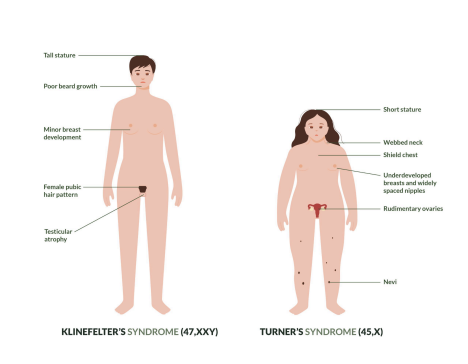
Klinefelter’s Syndrome (47,XXY) and Turner’s Syndrome (45,X) are chromosomal conditions that influence growth, puberty and long-term hormonal health.
Klinefelter’s and Turner’s syndromes are chromosomal conditions that affect sex development, growth and fertility due to variations in sex chromosomes.
Klinefelter’s Syndrome (47,XXY) and Turner’s Syndrome (45,X) are chromosomal conditions that influence growth, puberty and long-term hormonal health. Klinefelter’s affects males who have an additional X chromosome, often leading to low testosterone levels, slower pubertal development and infertility. Turner’s affects females who are missing all or part of one X chromosome, resulting in short stature, delayed puberty, ovarian insufficiency and specific health considerations affecting the heart, kidneys and bones.
Both conditions can vary widely in how they present, and many individuals are diagnosed only when puberty or fertility concerns arise. Early identification and timely management help support healthy growth, appropriate pubertal development, reproductive planning and long-term well-being.
What are Klinefelter’s and Turner’s Syndrome?
Klinefelter’s and Turner’s Syndrome are chromosomal conditions that alter how the body produces and regulates key hormones, leading to characteristic patterns of growth, development and reproductive function.
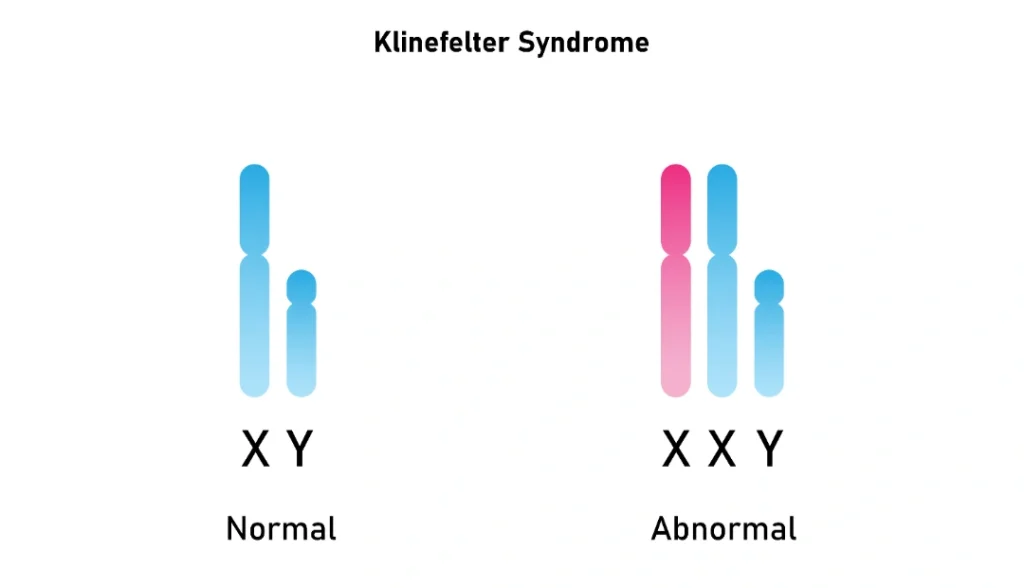
Klinefelter’s Syndrome is caused by the presence of an extra X chromosome in males (47,XXY), which disrupts normal testicular function and leads to lower testosterone production. This hormonal difference affects pubertal progression, sperm production and aspects of physical development such as muscle mass and body hair.
Turner’s Syndrome results from the complete or partial absence of one X chromosome in females (45,X), which affects ovarian development and reduces oestrogen production. As a result, many girls experience slower growth, delayed puberty and challenges related to reproductive health and long-term oestrogen deficiency.
Klinefelter’s Syndrome is a chromosomal condition in males caused by an extra X chromosome (47,XXY), leading to low testosterone levels and differences in puberty, fertility and physical development.
What are the signs and symptoms of Klinefelter’s and Turner’s Syndrome?
Both conditions can present differently from person to person, but certain patterns often provide early clues. Recognising these signs helps guide timely evaluation and management.
Klinefelter’s Syndrome:
Delayed puberty — slower than expected development of secondary sexual characteristics.
Reduced muscle mass — less muscle tone compared with peers of the same age.
Small testes — underdeveloped testicular size due to impaired function.
Infertility — limited sperm production affecting reproductive ability.
Learning or speech difficulties — subtle language or processing challenges that may appear in childhood.
Turner’s Syndrome:
Short stature — height falling below typical growth patterns for age.
Delayed puberty — limited or absent pubertal changes due to low oestrogen levels.
Ovarian insufficiency — poor ovarian development affecting hormone production and fertility.
Heart or kidney issues — structural differences that may require specialist monitoring.
Learning strengths and challenges — specific learning profiles with strong verbal skills and difficulties in spatial or mathematical tasks.
How are Klinefelter’s and Turner’s Syndrome diagnosed?
Diagnosis involves evaluating physical features, hormone levels and chromosomal patterns to confirm whether Klinefelter’s or Turner’s Syndrome is present. These assessments also help identify any related health concerns that may need early management.
Physical examination — identifying growth patterns, pubertal development and features suggestive of chromosomal differences.
Hormone blood tests — measuring testosterone, oestrogen and related hormones to assess reproductive function.
Karyotyping (chromosomal analysis) — confirming the presence of an extra X chromosome in Klinefelter’s or a missing X chromosome in Turner’s.
Ultrasound or echocardiogram for Turner’s — checking for heart or kidney variations commonly associated with the condition.
Developmental or learning assessments when needed — supporting early identification of language, cognitive or educational needs.
What are the treatment options for Klinefelter’s and Turner’s Syndrome?
Treatment for Klinefelter’s and Turner’s Syndrome focuses on correcting hormonal deficiencies, supporting healthy development and addressing associated medical or reproductive needs through early, tailored care.
Treatment options for Klinefelter’s Syndrome
For Klinefelter’s specifically, endocrine management focuses on improving testosterone levels and symptoms of low testosterone and addressing reproductive concerns. Treatment is tailored to each individual and may begin in childhood or adolescence. At The Metabolic Clinic, we often meet adults who did not have this support during their youth.
Testosterone therapy— used to induce puberty, improve energy and support long-term hormonal balance.
Fertility assessment and reproductive assistance — evaluating sperm production and exploring options such as sperm retrieval or assisted reproduction.
Management of metabolic and bone health — monitoring for weight gain, diabetes risk and ensuring good bone density.
Treatment options for Turner’s Syndrome
Treatment aims to promote healthy development, replacing missing hormones and monitoring associated health conditions. Interventions often begin early to optimise outcomes. At the Metabolic Clinic, we see adults with Turner’s syndrome where hormone replacement is crucial.
Oestrogen therapy— initiating puberty and allowing normal development of secondary sexual characteristics.
Combined hormone therapy — maintaining adult oestrogen levels for bone, cardiovascular and reproductive health.
Cardiac and renal monitoring — screening for heart or kidney differences often associated with Turner’s Syndrome.
Fertility evaluation and counselling — assessing ovarian function and discussing reproductive options, including assisted fertility pathways.
Potential benefits of early and ongoing management of Klinefelter’s and Turner’s Syndrome
Early diagnosis and consistent follow-up can make a significant difference in growth, puberty and overall well-being for individuals with Klinefelter’s or Turner’s Syndrome. Regular monitoring helps ensure that hormonal, physical and developmental needs are addressed at the right time.
Enhanced physical development and bone health — proper treatment supports muscle strength, height growth and long-term bone density.
Better metabolic and cardiovascular outcomes — early monitoring reduces risks linked to blood pressure, cholesterol and metabolic health.
Support for fertility planning — guidance helps individuals understand reproductive options and prepare for future family planning.
Improved emotional and social well-being — addressing developmental, psychosocial and educational needs enhances confidence and quality of life.
Risks, precautions and when additional specialist care is needed for Klinefelter’s and Turner’s Syndrome
Management of Klinefelter’s and Turner’s Syndrome is generally safe, but certain precautions are necessary to ensure treatment remains appropriate over time. Some individuals may require input from other specialists depending on associated health findings.
Possible medication side effects — hormone therapies may cause mild side effects that need monitoring and dose adjustments.
Associated health conditions — heart, kidney, thyroid or reproductive differences may require care from cardiology, nephrology or fertility specialists.
Importance of long-term follow-up — ongoing monitoring into adulthood helps manage hormonal needs, metabolic risks and fertility considerations.
When to see a specialist
Certain signs may suggest an underlying chromosomal or hormonal condition, and early assessment helps ensure timely diagnosis and appropriate care. Those under 18 should see a paediatric endocrinologist. Whereas those 18 and above should see an adult endocrinologist.
Delayed or atypical puberty — slower development of pubertal changes compared with peers.
Fertility concerns — difficulties conceiving or signs of reduced reproductive function.
Hormonal imbalance — symptoms or test results indicating low testosterone or oestrogen levels.
Abnormal genetic screening results — findings from prenatal or childhood testing that suggest a chromosomal abnormality.
Summary
Klinefelter’s and Turner’s Syndrome are chromosomal conditions that influence hormonal development, growth and long-term health. With early diagnosis and consistent follow-up, individuals can benefit from tailored hormonal support, improved puberty progression, better metabolic and cardiovascular outcomes and more informed fertility planning. Management often combines hormonal therapy, developmental support and monitoring for associated medical concerns, ensuring that each stage of growth and adulthood is approached with proper guidance.
If you have symptoms suggestive of Klinefelter’s or Turner’s Syndrome, schedule a consultation with The Metabolic Clinic for a detailed evaluation and a personalised management plan.
Yes. Prenatal tests such as chorionic villus sampling, amniocentesis or non-invasive prenatal screening can detect chromosomal differences, though confirmation is required after birth.
Most girls with Turner Syndrome do not start periods on their own because the ovaries often do not produce enough oestrogen. With hormonal treatment, many can experience induced periods and develop normal pubertal changes.
Life expectancy is close to normal with proper medical care. Regular monitoring of the heart, kidneys and metabolic health helps reduce long-term risks and supports healthy adulthood.
No. Turner Syndrome is not a form of dwarfism. Although short stature is common, it results from chromosomal differences rather than skeletal growth disorders.
Turner Syndrome is not a type of autism. Some girls may have specific learning profiles or social difficulties, but this is different from autism spectrum disorders.
Pregnancy is possible for some women with Turner’s, often through assisted reproductive methods, but requires careful cardiac and medical assessment due to pregnancy risks.
Hormonal treatment may continue into adulthood, but the duration varies. Treatment is reviewed regularly and adjusted based on age, health needs and hormone levels.
Some men with Klinefelter’s Syndrome can have biological children, especially with support from assisted reproductive techniques such as sperm retrieval and IVF. Early fertility assessment helps determine available options.
Not necessarily. Some may have traits like reduced muscle mass or less facial and body hair due to lower testosterone, but appearance varies widely and individuals look typically male.
Klinefelter’s Syndrome is a medical condition rather than a disability. Some individuals may need educational or developmental support, while others have minimal symptoms and lead fully independent lives.
Most individuals have normal intelligence. Some may have specific learning profiles, such as language challenges in Klinefelter’sor spatial reasoning difficulties in Turner’s,which are manageable with support.
Some individuals may experience confidence or social challenges due to delayed puberty or physical differences, but early support greatly improves well-being.
Regular physical activity is generally encouraged and supports cardiovascular, metabolic and emotional health, unless specific medical issues require modification.
chat with us
Welcome to The Metabolic Clinic
Holistic Care for Hormones, Bones, and Metabolic Health
Dr Dinesh graduated with honours from Monash University, Melbourne in 2009, receiving the Prince Henry's Prize in Surgery. During his endocrinology training in Melbourne, he won the top registrar award at the Endocrine Society of Australia Clinical Weekend in 2016, followed by securing Australia's only Andrology fellowship in 2017. Upon returning to Singapore, he was the sub-speciality lead for adrenal, pituitary, and bone services at Khoo Teck Puat Hospital and established The Metabolic Bone Clinic.
A passionate educator, he served as Associate Programme Director for Endocrinology at NHG, training the next generation of endocrinologists, and received the NHG Teaching Award for Senior Doctors in 2023. An expert endocrinologist with proficiency in both general and sub-speciality endocrinology, he has an interest in longevity through improving cardiovascular risk, metabolism, bone health, and muscle loss prevention, with the ultimate aim of improving the number of healthy years in one's life.
10+ Years of Experience in Hormone & Metabolic Health
Founder of The Metabolic Bone Clinic in Khoo Teck Puat Hospital
Sub-specialist training with international experts in Melbourne, Australia
Clinical Interest in Longevity & Metabolic Health
START YOUR PERSONALISED HEALTH JOURNEY
If you’re not achieving your treatment targets, struggling with weight changes, fatigue, or unexplained symptoms—it’s time to take a deeper look.
Get clarity with a tailored plan built around you and improving your metabolic health.