An insulin pump is a small wearable device that delivers continuous doses of insulin through a catheter to help manage blood sugar levels.
Insulin therapy is a vital part of diabetes management for people whose bodies cannot produce enough insulin or use it effectively. It replaces or supplements the body’s natural insulin, helping to regulate blood sugar levels, prevent dangerous fluctuations and protect against long-term complications of diabetes. For many individuals, especially those with type 1 diabetes, insulin therapy is essential to life, without which a diabetes emergency called DKA (Diabetic ketoacidosis) can occur that can be life-threatening.
In those with Type 2 diabetes, it is a last resort but essential in those with severe Type 2 diabetes, unresponsive to other medications.
Traditionally, insulin has been delivered through injections using syringes or pens, with different insulin types tailored to match the body’s needs throughout the day. While these methods remain highly effective, some people find injections challenging or struggle to achieve stable control of blood sugar.
Insulin pumps provide an effective and efficient alternative. These small, wearable devices deliver a steady supply of insulin under the skin and can be programmed to match a person’s lifestyle, meals and activity levels more precisely. For many patients, pump therapy offers greater flexibility, fewer injections and improved confidence in managing diabetes.
Whether through injections or pump therapy, the goal is the same: safe and effective control of blood sugar, allowing people with diabetes to live full and active lives.
What is insulin therapy?
Insulin therapy is a common treatment method for people with type 1 diabetes and is sometimes required for those with type 2 diabetes when other treatments no longer provide sufficient control due to failure of the pancreas to produce sufficient insulin. It replaces or supplements the body’s natural insulin, which is essential for moving glucose from the bloodstream into the cells for energy. Without enough insulin, blood sugar levels remain high, increasing the risk of both short-term emergencies and long-term complications affecting the eyes, kidneys, nerves and heart.
Treatment can be tailored using different preparations, depending on how quickly they act and how long they last:
Rapid-acting insulin — works within minutes and is used to control blood sugar at mealtimes. It is essential on top of long-acting insulin (elaborated below) in Type 1 Diabetes.
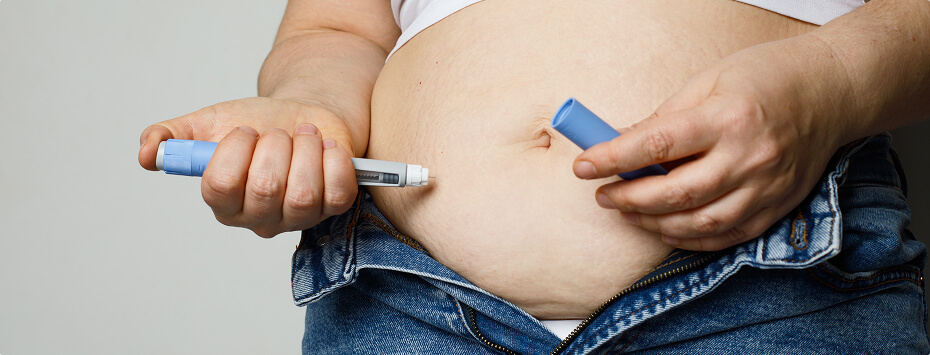
Delivery methods — insulin is most often given through injections using syringes or insulin pens, which allow precise dosing. The number of injections per day depends on the treatment plan, which may combine different insulin types.
Treatment goals — the aim of insulin therapy is to keep blood sugar within the target range, minimising the risk of hypoglycaemia (low blood sugar) and preventing long-term complications. With the right regimen and support, insulin therapy allows people with diabetes to live healthy and active lives.
Insulin therapy helps regulate blood sugar by replacing or supplementing the body’s natural insulin, preventing complications of diabetes.
What is insulin pump therapy?
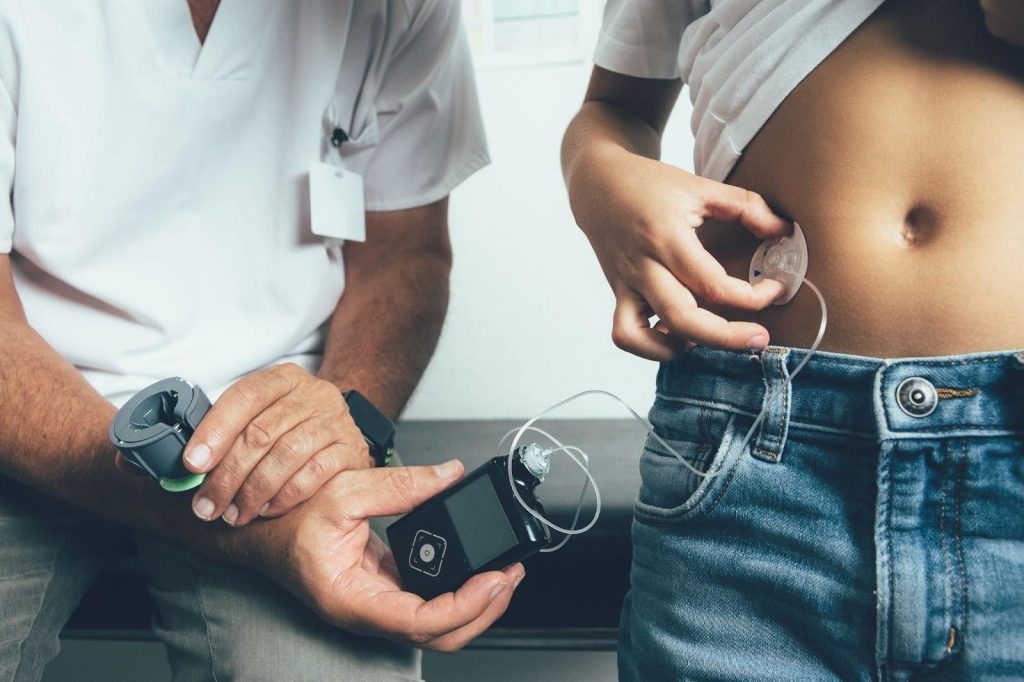
Insulin pump therapy is an advanced method of delivering insulin that provides more flexibility and precision than traditional injections. A small, computerised device worn on the body delivers insulin continuously through a tiny cannula placed under the skin, closely mimicking the way a healthy pancreas releases insulin.
How it works — the pump provides a steady background dose of insulin, known as the basal rate, throughout the day and night. At mealtimes, users can ask the pump to deliver an extra dose, called a bolus, to cover the rise in blood sugar from food as well as a correctional dose that aims to correct a high sugar prior to the meal. This flexibility allows insulin dosing to be adjusted to meals, activity levels and individual needs.
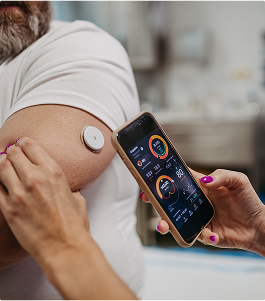
Components of a pump — modern pumps typically consist of a reservoir holding insulin, thin tubing connected to a cannula under the skin (or a tubeless patch system), and a small touchscreen interface for programming doses. Some pumps can link with continuous glucose monitoring (CGM) devices, creating “closed-loop” systems that automatically adjust insulin delivery based on real-time glucose levels.
Benefits — for many patients with Type 1 diabetes, insulin pumps offer greater convenience, fewer injections and improved blood sugar control, reducing fluctuations and lowering the risk of hypoglycaemia. Pumps can be particularly helpful for children, people with irregular schedules, or those who find it difficult to achieve stable control with injections alone.
Insulin pump therapy is not suitable for everyone (the patient will need to learn to estimate carbohydrates in a meal), but with proper training and support, it can be a powerful tool in managing diabetes more effectively and with greater confidence.
An insulin pump is a small device that delivers insulin continuously under the skin, providing flexible and precise blood sugar control.
Who needs insulin therapy or a pump?
Insulin therapy is essential for all people with type 1 diabetes, as their bodies cannot produce insulin at all. It is also sometimes required in type 2 diabetes, especially when blood sugar remains uncontrolled despite lifestyle changes and oral medicines/ GLP-1 agonists (injectible), or during times of illness, surgery, or pregnancy.
Type 1 diabetes — everyone with type 1 diabetes needs lifelong insulin therapy. Pump therapy may be particularly beneficial for children, teenagers and adults who require flexible dosing or struggle with blood sugar fluctuations.
Type 2 diabetes — some people with type 2 diabetes eventually need insulin when other treatments no longer provide adequate control.
Special situations — insulin pumps are often recommended for:
Pregnancy with Type 1 diabetes — to maintain tighter glucose control for the safety of both mother and baby.
Children and adolescents — to reduce the number of daily injections and provide dosing flexibility for growth and activity.
Unstable diabetes — in Type 1 diabetes affected individuals experiencing wide swings in blood sugar levels or frequent hypoglycaemia.
Choosing between injections and a pump depends on medical needs, lifestyle, personal preference and access to training and support. Both methods aim to achieve the same goal: safe and effective blood sugar control.
What are the benefits of insulin therapy and pump management?
Both insulin injections and insulin pumps are effective ways of managing diabetes and each offers distinct benefits. The choice depends on individual needs, preferences and medical circumstances.
Benefits of insulin therapy (injections)
Proven effectiveness — reliable and widely used for decades in the management of both type 1 and type 2 diabetes.
Flexibility of options — multiple types of insulin and dosing schedules can be tailored to fit different lifestyles.
Accessibility — insulin pens and injections are available worldwide and usually have lower upfront costs compared to pump therapy.
Safety in those with liver or kidney impairment — Often tablets for diabetes are contraindicated in those with liver or kidney impairment, and Insulin is a safe option to control diabetes in these individuals.
Simplicity — less technology-dependent, making them easier for some people to use.
Benefits of insulin pump therapy
Precise insulin delivery — continuous infusion helps reduce fluctuations in blood sugar, keeping levels more stable.
Lifestyle convenience — fewer needle injections, flexible mealtime dosing and easier adjustments during exercise or illness.
Reduced risk of hypoglycaemia— particularly when combined with continuous glucose monitoring systems.
Improved quality of life — Many people report greater confidence and freedom in managing daily routines, travel and social activities.
Improved glycaemic control- Blood sugars improve especially with algorithm based ‘hybrid loop systems’ that use continuous glucose monitoring to continuously adjust insulin to improve blood sugar control even when the patient is sleeping, precisely and safely.
Both methods, when managed well, can achieve excellent blood sugar control and protect against complications but as mentioned earlier, insulin is a last resort in Type 2 diabetes because of the risks elaborated below, whereas it is life-saving in Type 1 diabetes and is necessary.
What are the risks or complications of insulin therapy and pump management?
Like all treatments, insulin therapy and pump use can have side effects or challenges. Most risks can be managed with education, monitoring and regular follow-up.
Risks of insulin therapy (injections)
Hypoglycaemia (low blood sugar) — the most common risk, especially if too much insulin is taken or meals are delayed.
Injection site issues — repeated injections in the same area can cause lumps or skin changes (lipohypertrophy).
Social and practical challenges — some individuals find multiple daily injections burdensome or difficult to fit into daily routines.
Risks of insulin pump therapy
Technical problems — blockages, pump malfunctions or dislodged cannulas can interrupt insulin delivery, which may lead to high blood sugar or diabetic ketoacidosis (a Diabetes Emergency) if not corrected quickly.
Skin reactions — irritation or infection can occur at the infusion site.
Learning curve — pumps require training, regular monitoring and troubleshooting, which may feel overwhelming at first.
Cost — pumps are more expensive than injections and ongoing supplies add to long-term expense.
While these risks are important to understand, with proper education, monitoring and support from a diabetes care team, both insulin injections and pumps can be used safely and effectively.
Summary
Insulin therapy remains the foundation of diabetes management, whether delivered through traditional injections or with the support of modern pump technology. Both approaches are highly effective in keeping blood sugar within safe ranges, preventing complications and supporting long-term health. For some, insulin injections offer a simple and reliable option; for others, pump therapy provides greater flexibility, convenience and precision. With personalised guidance, patients can find the method that best fits their lifestyle and medical needs.
If you are considering insulin therapy or exploring whether an insulin pump is right for you, schedule a consultation with The Metabolic Clinic for medical guidance, comprehensive training and ongoing support in achieving safe and confident diabetes control.
No. While all people with type 1 diabetes need insulin, some with type 2 diabetes also require it when lifestyle measures and other medications are no longer enough.
This varies by treatment plan. Some people need just one or two injections daily, while others require multiple injections to mimic the body’s natural insulin release.
Many patients prefer pens because they are discreet, portable and allow more precise dosing. Both methods are effective and the choice depends on personal preference and medical advice. At the Metabolic Clinic, we favour the convenience of pens.
Most people find that insulin injections are not very painful, especially when using fine needles or pens. Rotating injection sites helps reduce discomfort and skin changes.
Pumps can provide more stable blood sugar control and greater flexibility, but they are not suitable for everyone due to cost. Some people achieve excellent results with injections.
The infusion set (cannula and tubing) is usually changed every two to three days. The insulin reservoir is refilled as needed. The pump itself lasts years.
Yes. Pumps are often recommended for children and adolescents, as they reduce the number of daily injections and allow more flexible dosing for growth and activity.
If the pump fails or is disconnected, blood sugar can rise quickly. Patients are trained to keep backup insulin and supplies for injections in case of emergency.
Yes. Pump settings can be adjusted to reduce insulin delivery during exercise, helping to prevent hypoglycaemia. The device can be worn securely during most activities.
Yes. Regular monitoring is still necessary. Many pumps can link with continuous glucose monitoring (CGM), but finger-stick checks are often still required.
People with type 1 diabetes need insulin permanently. In type 2 diabetes, insulin may be temporary or long-term, depending on how the condition progresses or if insulin resistance can be improved via weight loss/ GLP-1 therapy.
chat with us
Welcome to The Metabolic Clinic
Holistic Care for Hormones, Bones, and Metabolic Health
Dr Dinesh graduated with honours from Monash University, Melbourne in 2009, receiving the Prince Henry's Prize in Surgery. During his endocrinology training in Melbourne, he won the top registrar award at the Endocrine Society of Australia Clinical Weekend in 2016, followed by securing Australia's only Andrology fellowship in 2017. Upon returning to Singapore, he was the sub-speciality lead for adrenal, pituitary, and bone services at Khoo Teck Puat Hospital and established The Metabolic Bone Clinic.
A passionate educator, he served as Associate Programme Director for Endocrinology at NHG, training the next generation of endocrinologists, and received the NHG Teaching Award for Senior Doctors in 2023. An expert endocrinologist with proficiency in both general and sub-speciality endocrinology, he has an interest in longevity through improving cardiovascular risk, metabolism, bone health, and muscle loss prevention, with the ultimate aim of improving the number of healthy years in one's life.
10+ Years of Experience in Hormone & Metabolic Health
Founder of The Metabolic Bone Clinic in Khoo Teck Puat Hospital
Sub-specialist training with international experts in Melbourne, Australia
Clinical Interest in Longevity & Metabolic Health
START YOUR PERSONALISED HEALTH JOURNEY
If you’re not achieving your treatment targets, struggling with weight changes, fatigue, or unexplained symptoms—it’s time to take a deeper look.
Get clarity with a tailored plan built around you and improving your metabolic health.