Cushing’s disease is a hormonal disorder caused by a pituitary tumour that produces excessive amounts of adrenocorticotropic hormone (ACTH).
Cushing’s disease can cause weight gain, particularly around the abdomen, face and upper back, often accompanied by muscle weakness and skin changes.
What is Cushing’s disease?
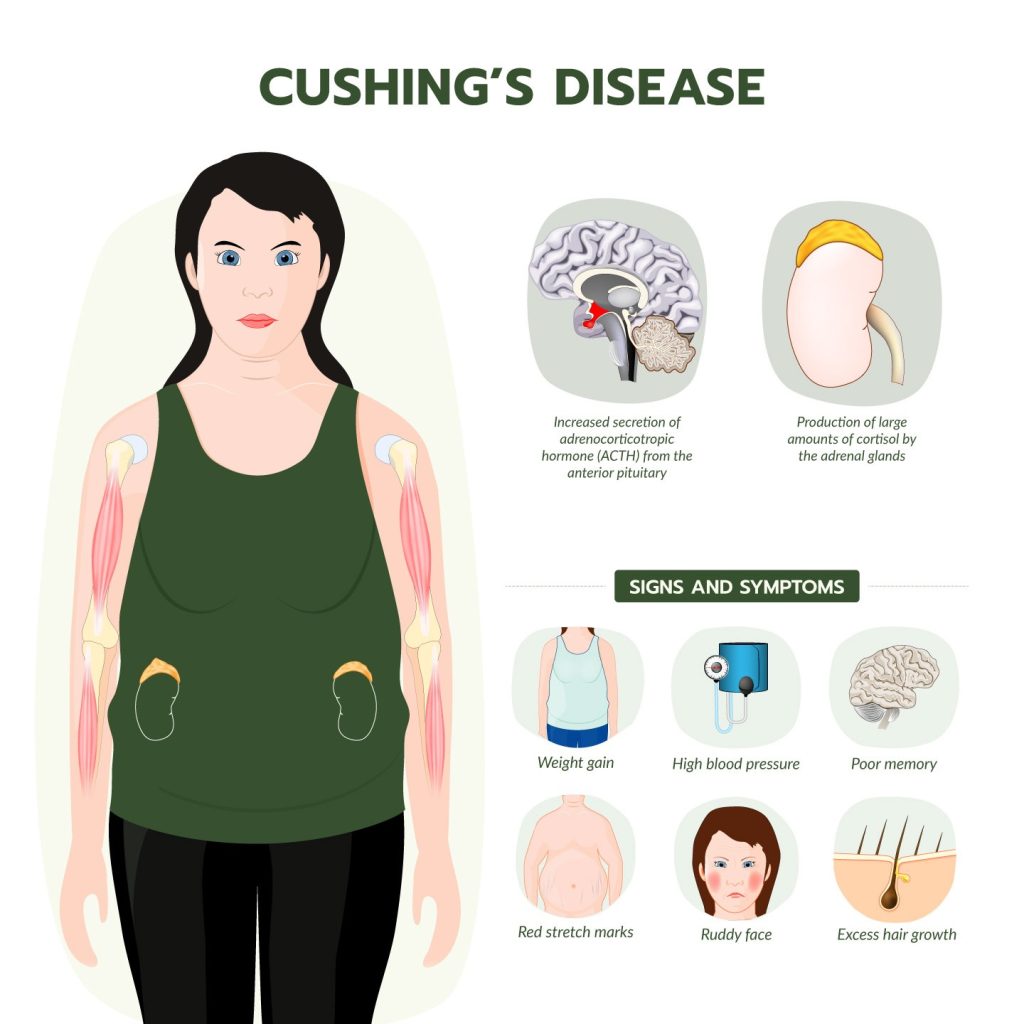
Cushing’s disease is a hormonal disorder caused by a pituitary tumour that produces excessive amounts of adrenocorticotropic hormone (ACTH). This overproduction of ACTH overstimulates the adrenal glands, leading to persistently high levels of cortisol, an essential-to-life stress hormone that affects metabolism, blood pressure and immune function.
Cushing’s disease is a specific cause of cushing’s syndrome. Cushing’s syndrome refers to an overall state of excess cortisol in the body, which can arise from various causes, including cushing’s disease, medications or adrenal tumours. Cushing’s disease, however, refers specifically to the form caused by an ACTH-secreting pituitary adenoma, a benign tumour located at the base of the brain at the pituitary.
Cortisol plays an essential role in regulating how the body responds to stress, maintains blood sugar and controls inflammation. It is essential to life. Without it, a drop of blood pressure and subsequently death occurs. Conversely when levels remain elevated for a long time, it can lead to a range of symptoms, including weight gain (particularly around the face and trunk), muscle weakness, high blood pressure and changes in mood or skin appearance.
Cushing’s disease is rare and occurs more often in women than in men, typically between the ages of 20 and 50. With accurate diagnosis and effective treatment, cortisol levels can be normalised, allowing recovery of hormonal balance and improved quality of life.
Cushing’s disease is a rare hormonal disorder caused by an ACTH-secreting pituitary tumour that leads to excessive cortisol production and widespread metabolic imbalance.
What causes Cushing’s disease?
Cushing’s disease develops when a benign (non-cancerous) tumour called a pituitary adenoma forms in the pituitary gland, located at the base of the brain. This tumour produces excessive amounts of adrenocorticotropic hormone (ACTH), which overstimulates the adrenal glands sitting atop the kidneys to release too much cortisol.
Cortisol is vital for maintaining blood pressure, regulating metabolism and managing the body’s response to stress. However, when ACTH secretion becomes uncontrolled, cortisol levels remain chronically elevated, disrupting many body systems.
Pituitary adenoma — the most common cause, they are usually small (microadenomas less than 10 mm), though larger tumours (macroadenomas) can occur. These tumours are almost always benign but can affect surrounding structures if they grow large enough (macroadenomas).
Genetic factors — in rare cases, Cushing’s disease may be associated with inherited conditions such as multiple endocrine neoplasia type 1 (MEN1), which predispose individuals to develop tumours in multiple endocrine glands.
Other rare causes — very rarely, excess ACTH production can result from abnormal pituitary tissue or hormone-secreting tumours elsewhere in the brain, but these represent a small minority of cases.
Understanding the cause is crucial, as treatment aims to remove or suppress the ACTH-producing tumour and restore normal cortisol levels, reducing the risk of long-term complications.
What are the symptoms of Cushing’s disease?
The symptoms of Cushing’s disease develop gradually and may vary depending on how long cortisol levels have been elevated and the severity of hormone excess. Because cortisol affects many systems in the body, symptoms can be wide-ranging and often mistaken for other conditions such as obesity, depression or polycystic ovary syndrome (PCOS).
Physical symptoms
Weight gain, particularly around the abdomen, chest and face, leading to a characteristic “moon face” appearance
Fat accumulation between the shoulders (previously called a “buffalo hump”)
Thinning of the skin, which bruises easily and heals slowly
Purple stretch marks (striae), especially on the abdomen, thighs, or arms
Muscle weakness, particularly in the upper arms and thighs
Loss of bone density (osteoporosis), increasing fracture risk
Metabolic and cardiovascular symptoms
High blood pressure and increased risk of cardiovascular disease
High blood sugar or diabetes mellitus due to insulin resistance
Fluid retention and swelling (oedema)
Reproductive and hormonal changes
In women: menstrual irregularities, infertility, or excess facial and body hair (hirsutism)
In men: reduced libido, erectile dysfunction and sometimes infertility
Psychological and general symptoms
Mood changes, including irritability, anxiety or depression
Fatigue, poor concentration and sleep disturbance
Cognitive difficulties or memory problems in advanced cases
Over time, untreated Cushing’s disease can lead to serious complications such as osteoporosis, cardiovascular disease and increased susceptibility to infections. Early recognition and proper treatment are essential to reverse hormonal imbalance and prevent long-term health effects.
Who is at risk of Cushing’s disease in Singapore?
Cushing’s disease is rare, but certain groups are more likely to develop it based on biological, genetic or medical factors. Recognising these risk factors can help with early detection and timely intervention.
Pituitary disorders — individuals with a history of pituitary adenomas or other pituitary abnormalities are at greater risk, as most cases of Cushing’s disease are caused by ACTH-secreting tumours within the pituitary gland.
Genetic predisposition — a small number of cases are linked to inherited syndromes such as multiple endocrine neoplasia type 1 (MEN1), which increases the likelihood of developing hormone-producing tumours in the pituitary, pancreas and parathyroid glands.
Other endocrine disorders — patients with adrenal or thyroid conditions are occasionally evaluated for secondary pituitary abnormalities, as these systems are closely interconnected through hormonal regulation.
While most people who develop Cushing’s disease do not have an identifiable risk factor, doctors need to be acutely aware of warning signs of possible cushing’s such as unexplained weight gain, rapidly progressive diabetes or high blood pressure, unusual infections and, easy bruising. Early medical assessment can improve outcomes.
What are the complications of Cushing’s disease?
Persistent high levels of cortisol can affect nearly every organ system in the body, leading to serious complications if left untreated. These effects develop gradually but can become irreversible without timely diagnosis and management.
Cardiovascular and metabolic complications
High blood pressure and atherosclerosis, increasing the risk of heart attack and stroke
High cholesterol and triglycerides, contributing to metabolic syndrome
Weight gain and central obesity, which further exacerbate cardiovascular risk
Musculoskeletal complications
Osteoporosis, caused by cortisol increasing bone loss and affecting Vitamin D metabolism, increasing fracture risk
Muscle wasting and weakness, particularly in the upper arms and thighs contributing to sarcopenia
Immune and infectious complications
Suppressed immune function, making patients more prone to infections
Slow wound healing, due to impaired collagen synthesis
Psychological and neurological complications
Depression, anxiety and mood swings
Memory and concentration difficulties, often linked to prolonged cortisol exposure
Reproductive and endocrine complications
Menstrual irregularities and infertility in women
Low testosterone and sexual dysfunction in men
Hypopituitarism, if a large pituitary tumour compresses surrounding hormone-producing tissue
General and long-term risks
Increased clotting tendency, which raises the risk of deep vein thrombosis or pulmonary embolism
Higher overall mortality if untreated, mainly due to cardiovascular and infectious causes
Early treatment to normalise cortisol levels can reverse many of these complications and restore long-term health. Ongoing monitoring after therapy helps detect residual effects and prevent recurrence.
How is Cushing’s disease diagnosed?
Diagnosing Cushing’s disease requires a detailed assessment of symptoms, hormone levels, and imaging studies to confirm the source of excess cortisol. Because many of its features overlap with common conditions such as obesity, diabetes, or depression, a structured diagnostic approach is essential.
Hormone testing
Initial tests focus on confirming high cortisol levels and determining whether the excess is ACTH-dependent (pituitary-related). Common investigations include:
24-hour urinary free cortisol test — measures total cortisol production over a full day; elevated levels suggest hypercortisolism.
Late-night salivary cortisol test — cortisol should normally be low at night; persistently high levels indicate loss of normal hormonal rhythm.
Blood tests are performed to measure ACTH levels. Elevated ACTH points to a pituitary or ectopic (non-pituitary) source of cortisol overproduction.
Imaging studies
Magnetic resonance imaging (MRI) of the pituitary gland is the preferred method for identifying ACTH-secreting adenomas.
If the tumour is small or not clearly visible, inferior petrosal sinus sampling (IPSS) may be performed. This advanced test measures ACTH levels directly from veins draining the pituitary gland, confirming the diagnosis of Cushing’s disease and distinguishing it from other causes of Cushing’s syndrome.
Additional evaluations
Blood sugar, blood pressure, bone density and cholesterol levels are assessed to identify complications related to prolonged cortisol excess.
Accurate diagnosis is crucial before initiating treatment, as managing Cushing’s disease differs from treating other forms of cortisol excess.
What are the treatment options for Cushing’s disease in Singapore?
The goal of treatment is to normalise cortisol levels, remove or control the ACTH-secreting pituitary tumour and reverse the effects of prolonged hormone excess. Treatment is tailored to the tumour’s size, location and the patient’s overall health.
Surgery
Transsphenoidal surgery is the primary treatment for most patients. The pituitary tumour is accessed through the nasal passage and carefully removed without external incisions.
This procedure can restore normal ACTH production and reduce cortisol levels to normal within days.
Success rates are highest when the tumour is small (microadenoma). Larger tumours (macroadenomas) may be more difficult to remove completely and sometimes require additional therapy.
Adrenal-blocking agents such as ketoconazole, metyrapone or osilodrostat, which reduce cortisol production by the adrenal glands.
Pituitary-directed drugs such as pasireotide, which suppress ACTH secretion.
Glucocorticoid receptor antagonists like mifepristone, used in selected cases to block cortisol’s effects on body tissues.
Radiotherapy
Radiotherapy may be recommended if surgery cannot fully remove the tumour or if it recurs.
Modern stereotactic techniques deliver precise doses to the pituitary gland while sparing surrounding structures.
The effects of radiotherapy develop gradually over several months or years, so interim medical therapy is often needed.
Bilateral adrenalectomy
In rare cases where cortisol levels remain uncontrolled after other treatments, removal of both adrenal glands may be considered to eliminate cortisol production entirely.
Lifelong hormone replacement is then required to maintain essential adrenal function.
Ongoing care and monitoring
Regular follow-up is crucial, including blood tests to monitor cortisol levels, MRI scans to check for recurrence and assessment of bone, cardiovascular and metabolic health. Early detection of recurrence allows prompt re-treatment and prevents complications.
With timely and effective management, most patients achieve long-term hormonal control and significant improvement in symptoms and quality of life.
Prognosis and long-term outlook for Cushing’s disease
With appropriate treatment, most patients with Cushing’s disease can achieve normal or near-normal cortisol levels and experience significant improvement in symptoms. However, recovery may take time, as the body adjusts after prolonged exposure to high cortisol levels.
After successful treatment — when the ACTH-producing tumour is fully removed, cortisol levels often return to normal within days or weeks. Some patients may temporarily require cortisol replacement therapy until normal adrenal function resumes. Physical symptoms such as facial rounding, muscle weakness and high blood pressure gradually improve, while emotional well-being and energy levels also recover over time.
Recurrence and ongoing monitoring — even after successful surgery, recurrence can occur, sometimes years later. Lifelong follow-up with regular hormone testing and MRI scans is therefore essential. Early detection of relapse allows timely intervention and prevents complications.
Long-term health considerations —some effects of prolonged cortisol exposure, such as osteoporosis, diabetes or cardiovascular disease may persist despite hormonal recovery. Targeted management of these conditions is an important part of ongoing care. Psychological support may also be beneficial, as mood and cognitive symptoms can take longer to resolve.
Outlook and quality of life — with early diagnosis, effective treatment and consistent follow-up, most patients can expect a good long-term prognosis. Advances in surgical techniques, medical therapy and imaging have significantly improved recovery rates and reduced the risk of complications.
Summary
Cushing’s disease is a rare but serious hormonal disorder caused by an ACTH-producing tumour of the pituitary gland, leading to excessive cortisol production. The resulting hormonal imbalance affects nearly every system in the body, causing weight gain, muscle weakness, high blood pressure, mood changes and other complications that can significantly impact long-term health and quality of life.
Advances in diagnostic testing and imaging allow for accurate identification of the underlying cause, while modern surgical and medical treatments can effectively restore normal cortisol levels and reverse many of the physical and metabolic effects. With proper management, most patients achieve long-term hormonal control, improved energy and a return to normal daily functioning.
If you are experiencing symptoms that may suggest hormonal imbalance or have been diagnosed with elevated cortisol levels, schedule a consultation with The Metabolic Clinic for a comprehensive evaluation and subsequen treatment aimed at reversing the condition and correcting metabolic abnormalities.
No. Cushing’s disease refers specifically to a pituitary tumour that produces excess ACTH, causing cortisol overproduction. Cushing’s syndrome is a broader term describing high cortisol levels from any cause, also including medications or adrenal tumours.
Common symptoms include weight gain around the abdomen and face, thinning skin, easy bruising, muscle weakness, high blood pressure and mood changes such as irritability or depression.
Yes. Women may experience irregular or absent menstrual periods, while men may have low testosterone levels, reduced libido or infertility due to disrupted hormone regulation.
Elevated cortisol levels can cause mood swings, anxiety, depression and difficulty concentrating. These symptoms usually improve once hormone levels are stabilised.
Most cases are not inherited. However, in rare instances, it may occur as part of genetic conditions such as multiple endocrine neoplasia type 1 (MEN1).
Recovery varies between individuals. Some symptoms, such as mood and energy levels, improve within weeks, while physical changes and metabolic balance may take months to stabilise.
With timely diagnosis, appropriate treatment and ongoing care, most patients achieve good hormonal control, improved symptoms and a normal life expectancy.
chat with us
Welcome to The Metabolic Clinic
Holistic Care for Hormones, Bones, and Metabolic Health
Dr Dinesh graduated with honours from Monash University, Melbourne in 2009, receiving the Prince Henry's Prize in Surgery. During his endocrinology training in Melbourne, he won the top registrar award at the Endocrine Society of Australia Clinical Weekend in 2016, followed by securing Australia's only Andrology fellowship in 2017. Upon returning to Singapore, he was the sub-speciality lead for adrenal, pituitary, and bone services at Khoo Teck Puat Hospital and established The Metabolic Bone Clinic.
A passionate educator, he served as Associate Programme Director for Endocrinology at NHG, training the next generation of endocrinologists, and received the NHG Teaching Award for Senior Doctors in 2023. An expert endocrinologist with proficiency in both general and sub-speciality endocrinology, he has an interest in longevity through improving cardiovascular risk, metabolism, bone health, and muscle loss prevention, with the ultimate aim of improving the number of healthy years in one's life.
10+ Years of Experience in Hormone & Metabolic Health
Founder of The Metabolic Bone Clinic in Khoo Teck Puat Hospital
Sub-specialist training with international experts in Melbourne, Australia
Clinical Interest in Longevity & Metabolic Health
START YOUR PERSONALISED HEALTH JOURNEY
If you’re not achieving your treatment targets, struggling with weight changes, fatigue, or unexplained symptoms—it’s time to take a deeper look.
Get clarity with a tailored plan built around you and improving your metabolic health.